NTUC and KPMG launch AI workforce transformation programme
SINGAPORE – New structural gaps are appearing in the workforce even as Singapore’s economy continues to do relatively well, said labour chief Ng Chee Meng.
Retrenchment rates have peaked to similar levels as during the Covid-19 pandemic, while the economy grew about 5% a year over the last three years, said Ng, who is also Minister in the Prime Minister’s Office.
There are many factors behind the retrenchments, which spiked to 4,620 in the second quarter of 2026, and one could be restructuring from artificial intelligence, Ng said on Oct 22.
Another growing concern is the delay fresh graduates are facing in getting jobs after graduation, he added.
In response to this, he urged companies and workers to work with the labour movement to explore AI.
The key question is how to do so, Ng told a group of business leaders and unionists at the launch of a new collaboration between NTUC and professional services firm KPMG held at the NTUC Centre in Marina Bay.
He announced that under the collaboration, the two organisations will establish a programme to help companies with workforce transformation and to adopt AI.
Companies can use two grants – the NTUC company training committee grant and the Enterprise Workforce Transformation Package – to pay for its different stages.
There are no limits on the number or kinds of companies which can apply to join the programme – known as Jumpstart Your Workforce Transformation – although each grant has its own eligibility criteria.
NTUC LearningHub and KPMG have also agreed to develop six courses on AI, including its applications in sustainability and finance.
This collaboration establishes KPMG as the latest of NTUC’s “lead multipliers” – industry leaders working with the labour movement to scale AI adoption.
Others include consulting firm PwC and tech firms Amazon Web Services and Huawei.
NTUC has seen some success with this model, and with its company training committees (CTCs), said Ng.
CTCs bring together a company’s management and union representatives to figure out what skills employees need as businesses evolve and to plan the training and job changes that follow.
The labour movement plans to scale both schemes, Ng said, as it works to ensure that AI adoption in Singapore does not result in “jobless growth”.
At a fireside chat after his speech with KPMG managing partner Lee Sze Yeng, Ng also outlined how NTUC plans to help workers adapt to AI.
NTUC is working to grow its capabilities to “enable” workers, Ng said, and CTCs are part of this push. The labour movement is “clear-minded” that there will be some level of disruption to workers from AI adoption, he added.
“We recognise completely that there will be some segments of disrupted sectors of the economy, and therefore there will be major structural changes too, to the workforce,” he said.
In response, NTUC’s largest move must be to prepare the workforce to be relevant to the AI economy, he said.
It will also help those who cannot do so pivot to other jobs and to protect those who cannot do either so that they can bounce back, he said.
Looking wider, Singapore’s education system should also take a fresh look at the skills it is building, Ng said in response to a question on how Singaporeans can respond to the speed of technological change in the workplace.
“From primary school, secondary school, all the way to institutes of higher learning, should we rethink how to build agility of mind, to build resilience on top of the current strengths?”
Companies can apply to join Jumpstart Your Workforce Transformation from Oct 22.
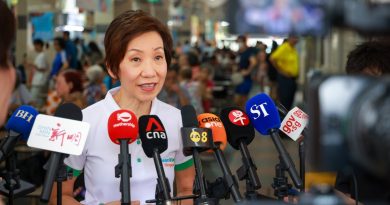
Speaking to the media on the sidelines of the event, KPMG’s Lee said its role in the collaboration will be to help companies break down job roles, understand tasks involved and where it makes sense to adopt technology and where it does not.
It will also help companies figure out how to help people fill gaps and acquire new skills.
“In the end, it’s really about having a clear roadmap: what companies need to do, what employees need to do,” she said.