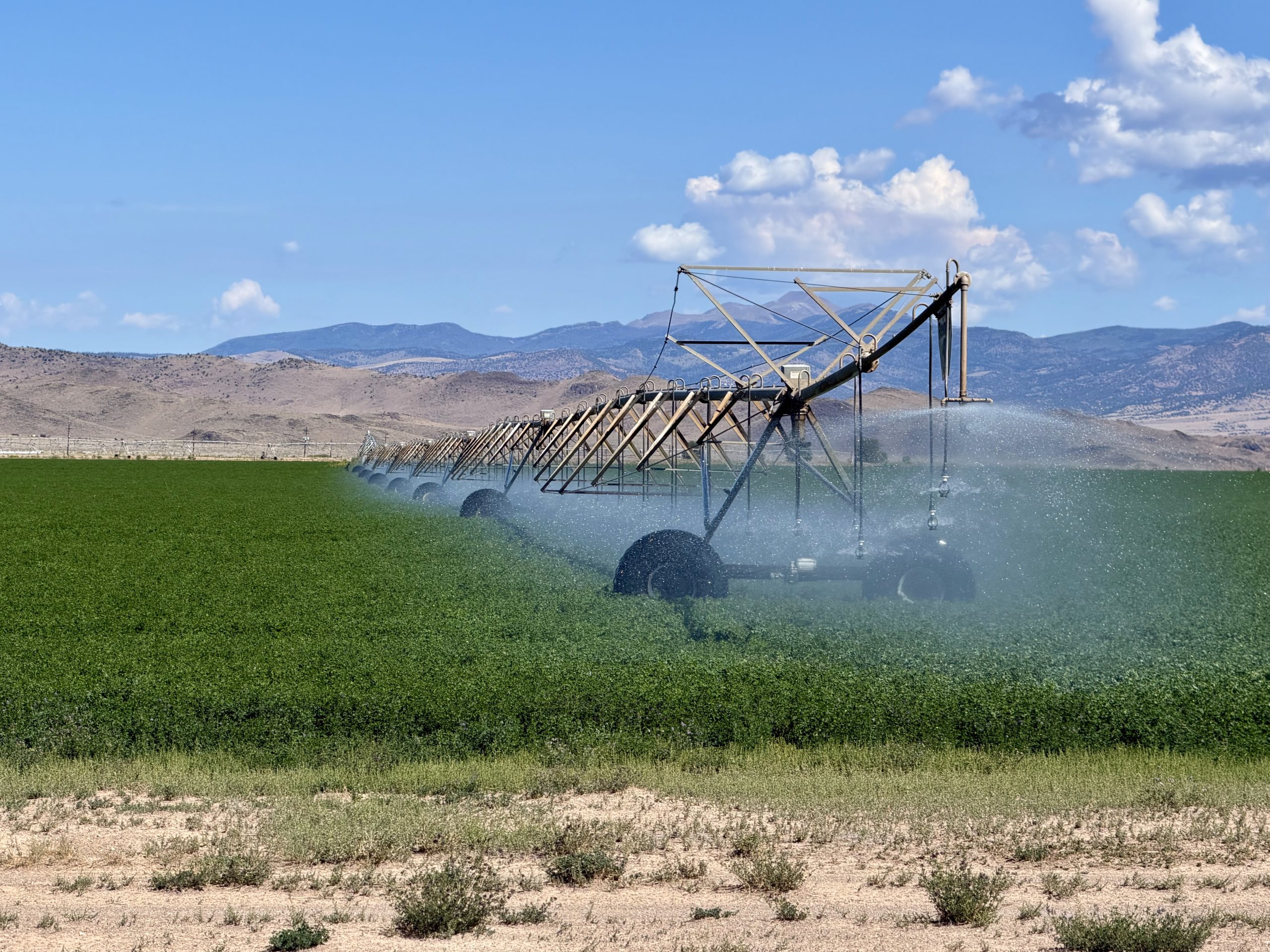
Crucial San Luis Valley aquifer plummets to record low
Drought-challenged potato farms in the San Luis Valley drained another 72,000 acre-feet of water from the crucial unconfined aquifer this year, the latest tests show, losing more ground on a mandated restoration goal and putting more pressure on a state water court to mediate a solution.
The local water conservation district has cut 100,000 acre-feet of groundwater pumping in recent years, but any progress has been overwhelmed by the ongoing drought and demands from the valley’s vital potato economy. The conservation plan currently in force calls for water-use cuts to replenish the unconfined aquifer to within 200,000 to 400,000 acre-feet below a 1976 benchmark by 2031, but the September well tests show the pool at 1.425 million acre-feet below that mark. And dropping.
An Alamosa-based water court judge presided over a July trial with different farming factions arguing over the best update for the conservation plan. The Rio Grande Water Conservation District Subdistrict 1 proposal, approved by the state water engineer, would seek faster restoration by charging farmers who pump groundwater without a surface water replacement as much as $500 an acre-foot, up from the current $150.
Competing factions of potato farmers in the northern part of the valley, which ships massive amounts of potatoes to Front Range and regional grocery stores, say $500 for pumped water would likely put many of them out of business.
An acre-foot of water covers an acre of agricultural land in 12 inches of water, or serves 2 to 4 city households for a year.
The San Luis Valley can count on only 6 or 7 inches of precipitation a year, local farmers say, compared with 12 to 15 inches in farming areas of the Eastern Plains. Only 2 to 3 inches come to the valley during the growing season. Potatoes need about 20 inches of water by harvest time. The gap must be made up by irrigation, from surface water canals drawing from the upper Rio Grande or its tributaries, or by groundwater pumping.
Cleave Simpson, a Republican state senator and general manager of the Rio Grande Water Conservation District, said the bad news from the latest well tests was expected, and underlines the need for the district’s proposal in water court.
“I’m not surprised at the September reading, given the lack of winter snowfall, stream runoff and lack of summer monsoons this year,” Simpson said. “It’s frustrating that after 14 years of active aquifer management and reducing our dependence on pumping groundwater by one-third, we are at a new aquifer record low level. The sense of urgency just continues to grow exponentially.”
Under the currently approved plan for recovery, Simpson noted, “the state engineer would be well within his authority to shut down all groundwater withdrawals for subdistrict 1 wells that lack a court-approved augmentation plan, as early as the 2027 irrigation season.”
The next amended plan that the judge has under consideration “will be a more aggressive approach and provide a path forward to aquifer recovery, if he approves it,” Simpson said. “These are extremely challenging conditions for our farmers and ranchers and the broader community here in the San Luis Valley.”
State engineer Jason Ullmann said via email Tuesday he couldn’t comment in depth about the new measurement since an amended plan is now in the hands of the water court judge.
“However,” Ullmann said, “I believe it is safe to say that the continued decline in the aquifer as reported by the Davis Engineering Study confirms that the current plan in subdistrict number one is not working to achieve a sustainable water supply.”
The September readings show the unconfined aquifer, which is closer to the surface than the deeper, confined aquifer, lost 71,921 acre-feet since September 2025. That followed a drop of just under 31,000 acre-feet last year. The aquifer has gained water in only three of the past 10 years, according to the district’s latest report, and those gains have been more than wiped out by the drought years.
The confined aquifer much deeper underground throughout the valley has its own set of well rules and regulations. The confined aquifer is artesian, under great pressure that brings water to the surface without pumping, and state rules are meant to protect the unique resource.
The valley’s unconfined aquifer has never recovered from a steep plummet in the 2002 statewide drought, and now sits at about 1,125,000 acre-feet below that 2002 departure point.