Saturday’s violence in France was a generational revolt, but there may be worse to come
Saturday’s wave of riots, looting and burning in cities across France was a “generational insurrection”, writes John Lichfield. But the violence may come to be seen as mild if Marine Le Pen comes to power next spring.
We have been here before. Or so it seems.
The wave of smashing, burning and looting which disfigured France on Saturday resembled the violent Acts Two and Three of the Gilets Jaunes rebellion in November and December 2018.
Don’t miss John Lichfield’s expert French politics analysis
And yet this was different and even more worrying. It was not a rural and suburban revolt. Small town France was undisturbed. This was a metropolitan and generational insurrection by three different categories of young people.
The first were lycée and university students who joined older marchers to demonstrate against crumbling schools and the high cost of living. They were by far the most numerous and largely peaceful.
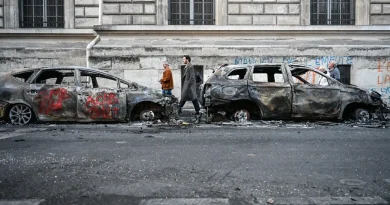
The second were the so-called black blocs of the “smash-it-all-down” Ultra Left and their hangers-on. They were responsible for most of the police-baiting, stone-throwing, arson and vandalism.
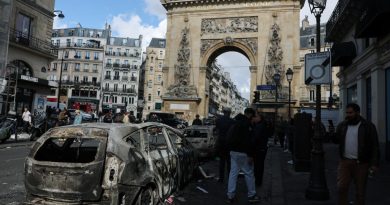
The third group were teenage criminal gangs and other youngsters as young as 14 from the multi-racial inner suburbs. They poured into unprotected city-centres and looted shops.
The second group, more numerous than ever before, hijacked what was supposed to be a peaceful protest. The third group took advantage of the fact that the riot police were overwhelmed and pillaged whole streets in Paris, Bordeaux, Marseille, Nantes and elsewhere.
Police officers run past a fire at the Boulevard des Capucines during a demonstration to protest against the “high cost of living”, in Paris on October 17, 2026 as part of a nationwide call for mobilisation bringing together various groups expressing their anger: (Photo by Kiran RIDLEY / AFP)
It is important to make these distinctions, even if there was some overlap. The violence and looting did not come from “protesters” as some headlines suggest. It came from groups dedicated to violence and looting.
What do the three groups have in common? Not much – and also everything.
There may have been three separate rebellions on Saturday but it was a single generational revolt. The most important and disturbing lesson is that three very different categories of young French people think that they have no stake in a system which is supposedly dedicated to liberty, equality and fraternity.
The masked ultra-left “casseurs” (smashers) usually target capitalist-imperialist bus-shelters. They are easy targets and splinter easily. This time they assaulted police stations and town halls – symbols of the Republic itself.
Many questions will be asked about what happened on Saturday and why. Why was the government ill-prepared? At several points, the police get their tactics wrong, tear-gassing peaceful “Group One” instead of violent “Group Two”.
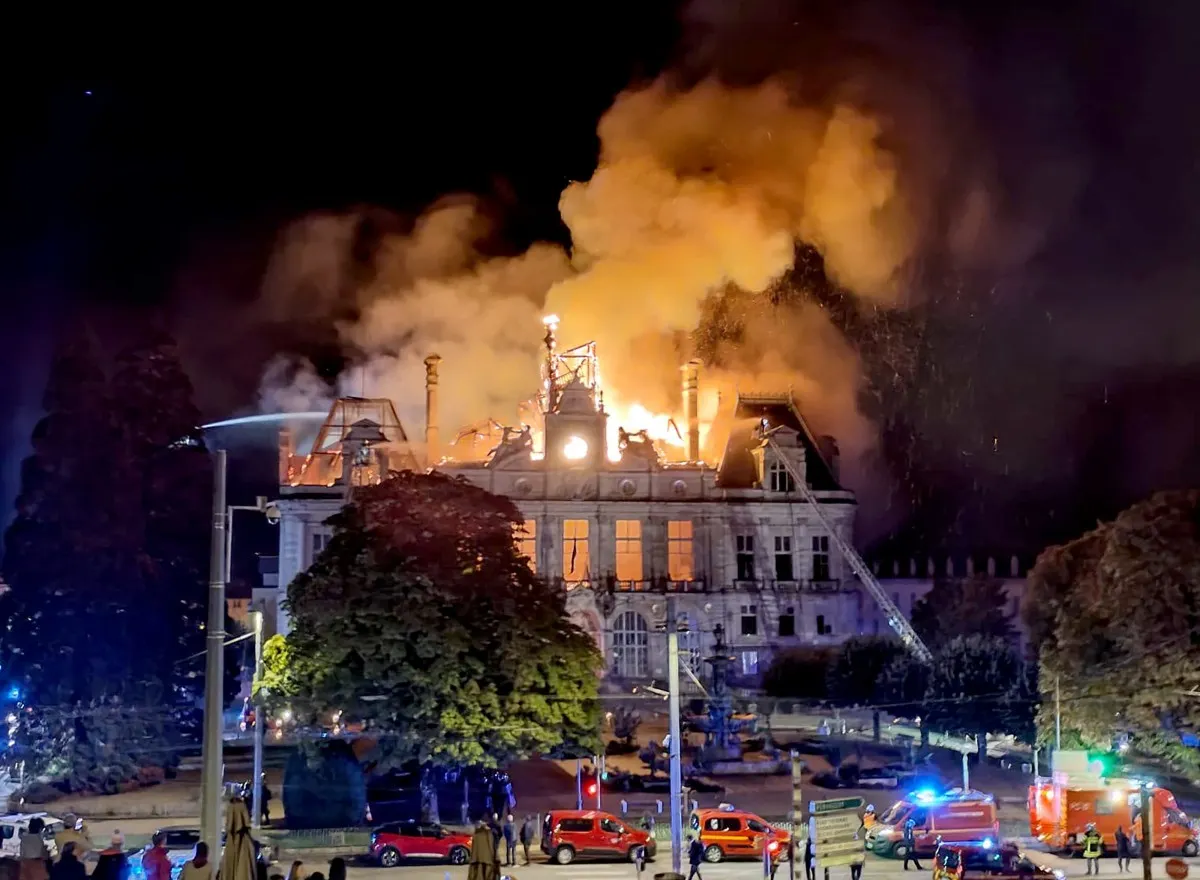
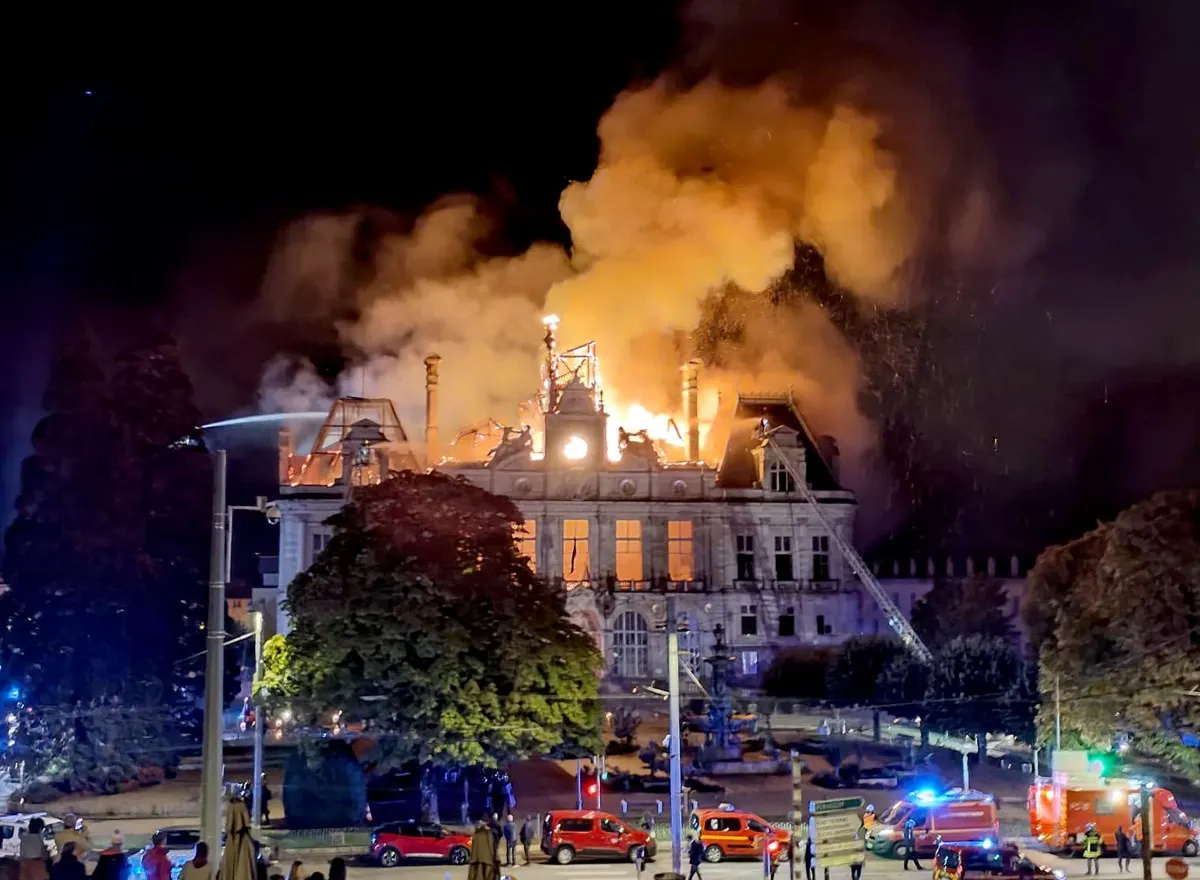
Why were the forces deployed by the ultra-left bigger and more widespread than usual? Paris, Bordeaux and Nantes can always produce a regiment of anti-capitalist wreckers. On Saturday night, sleepy Limoges was also attacked by a hooded commando of young people who burned the 143-years old town hall.
Some people will echo the hard-left leader Jean-Luc Mélenchon by accusing the government of orchestrating the violence to discredit the Left.
This is nonsense. The only winners from the weekend violence were Marine Le Pen and the Far Right Rassemblement National.
The black blocs regard Mélenchon as too moderate. And yet he and other senior officials of La France Insoumise have made several ambivalent remarks about violence since the lycée revolt began in September. That may well have swelled the numbers of fellow-travellers of the ultra-left on Saturday. Even Mélenchon took fright eventually at the extent of the violence and urged his followers to remain peaceful.
The most important and difficult single question remains:
“Why do many different types of young French people feel that they have no stake in the system?”
Almost ten years ago President Emmanuel Macron came to power promising a peaceful revolution to break down the entrenched privileges in French society which – among other things – favour the old over the young. He has failed but that failure is not his alone.
Macron’s policies reduced youth unemployment for a while. It is now back over 21 percent (compared to an EU average of 15 percent) as the economic slowdown and Artificial Intelligence reduce opportunities for school-leavers.
Macron tinkered with the education system, seeking to end the bizarre situation where 70 percent of first year university students in France failed to complete a degree. His solution – a selection process which dared not speak its name – proved muddled and unfair. Lycée students now want to go back to the old system of all-comers-accepted and a choice by lottery.
Macron tried to reduce the weight of a pensions system which gives an unusual part of French wealth to the retired. He was resisted by Left and Far Right. His partial reform has been frozen.
Some French media expressed shock and horror last week when the government “revealed” that 30 percent of the €90 billion schools budget goes not to the young but the old. It pays the pensions of retired teachers.
That was scarcely news. I have mentioned it several times in this column. It explains partly why schools are crumbling while France nominally spends more than the OECD average on education.
Macron did not create this absurd situation. He attempted to change it and failed under the weight of resistance to changes in a country which constantly demands change.
Saturday’s riots seem certain to benefit the Far Right. Le Pen accuses Macron of building the bonfire of grievances and Mélenchon of setting light to it. None of her failings seem to damage her; all events seem to conspire to boost her.
If Le Pen IS the next president, little will be done to help young people. She is committed to tipping the balance further against them by reducing the pension age to 60 or 62.
Over 40 percent of voters aged 18 to 24 support Mélenchon and his equally innumerate proposals to increase French taxation by one third.
If Le Pen is elected, as seems increasingly likely, Mélenchon’s LFI is already talking of having a “third round” of the election in the streets: in other words, organising protests in the knowledge that they will turn violent,
The French police are poor at crowd control. Under Macron, whatever the Left may say, they have been equipped with brakes of a kind. Under Le Pen, the brakes would probably come off.
Next spring Saturday’s violence may come to seem mild.