Employers urged to protect workers as haze worsens
Follow our live coverage here.
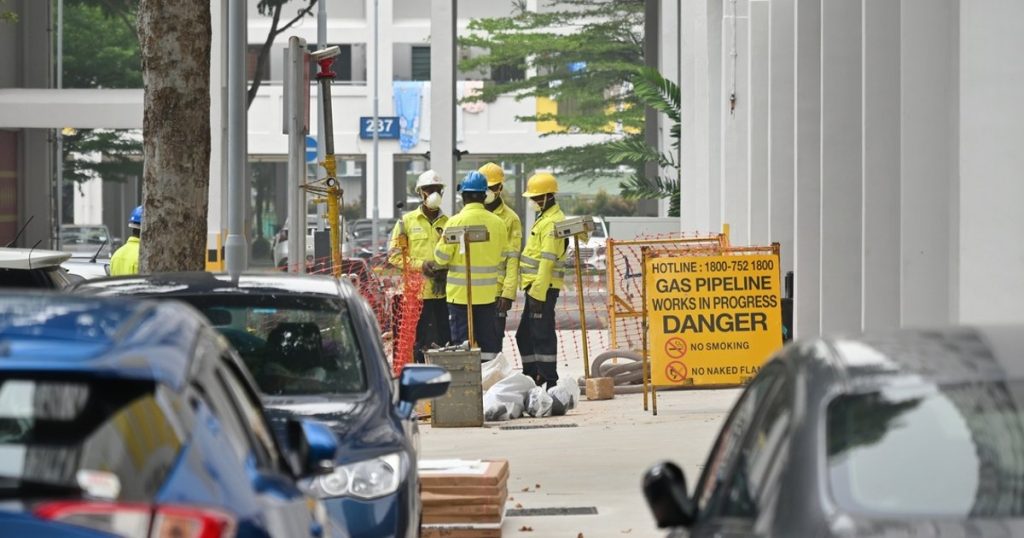
SINGAPORE – Employers should plan for changes to work arrangements and protective measures for workers ahead of worsening haze conditions, which could hit hazardous levels.
This includes discussions on flexible work arrangements where feasible, said Acting Minister for Manpower Jasmin Lau at an Oct 16 press conference.
“Protecting workers from haze is not optional”, said Lau, citing the obligations of employers under the Workplace Safety and Health Act to keep their staff safe, including from the haze.
Employers should monitor the haze situation, assess the risk to their workers and follow the Ministry of Manpower’s haze guidelines, she said.
This comes as hazy conditions deteriorated across Singapore on Oct 16, with the 24-hour Pollutant Standards Index (PSI) hitting a high of 229 for the current haze season at 3pm in the central region.
By Oct 16, Singapore had logged its 12th consecutive day of unhealthy air since Oct 5 – the longest continuous stretch of poor air quality the country has endured since the 2015 haze crisis. That year, bad air lasted 14 days from Sept 23 to Oct 7.
The MOM has conducted more than 400 worksite inspections since September, said Lau, and “most employers have done the right thing” in protecting their employees from the effects of the haze.
About a quarter of the companies have fallen short, however, and have been directed to put things right.
“We will check again. We will continue the inspections while the haze lasts,” Lau said.
Lau said employers should adhere to MOM’s guidelines to carry out risk assessments and implement appropriate measures.
For instance, if the 24-hour PSI forecast exceeds 200 – into the very unhealthy range – prolonged or strenuous outdoor work should be avoided.
For vulnerable workers, such as seniors, pregnant women and those with chronic lung or heart disease, employers should minimise or avoid outdoor work for them.
N95 masks should be provided to workers working outdoors for a prolonged period of time.
When the PSI forecast exceeds 300 and enters the hazardous range, outdoor work should be minimised and non-essential outdoor work deferred, even for healthy workers.
“Employers should plan for these measures now, so that they are well prepared if the situation worsens,” Lau said.
MOM will issue additional advice to aid employers in referencing the one-hour PM2.5 reading, including when they might need to completely pause outdoor work for vulnerable workers.
Workers with health and safety concerns during hazy conditions should raise them with their employers, and they may also report their concerns to MOM, said Lau.
She pointed out that the haze has caused practical problems at home, such as parents having to care for sick children or dealing with home-based learning if air quality worsens.
In such cases, she urged employers to allow employees to work from home, especially for those who are more vulnerable.
She pointed out that under the tripartite guidelines on flexible work arrangement requests, employers must properly consider such requests from their employees.
She noted that flexible work arrangements are not feasible for all jobs, and in those cases, workers could be allowed to use their annual leave or childcare leave entitlements when needed.
For those who have already used their leave entitlements, Lau urged employers to be flexible in allowing their staff to draw on next year’s entitlement, or to grant them paid time off, without affecting their wages.
She also said that unwell employees should see a doctor and that medical leave applies as usual.
Platform workers should be protected too
Platform operators have duties under the Platform Workers Act to ensure the health and safety of their workers – those who provide ride-hail or delivery services, Lau said.
“This includes not penalising them through incentive schemes, reduced job allocation, or pay deductions.”
MOM has reminded all platform operators to advise their workers on how to protect themselves from the haze.
She noted that operators such as Grab and Foodpanda had partnered with the National Delivery Champions Association to distribute N95 masks to their unionised workers and hoped to see similar efforts from more platform operators.