Dan Ives Builds Yorkville Ives Research Business After Wedbush
Dan Ives has spent much of his Wall Street career telling investors which technology companies to follow. Now he’s trying to persuade them to follow him. The famously bullish analyst, whose predictions about Apple and Tesla helped make him a fixture on financial television, left Wedbush Securities in July after eight years to help build Yorkville Ives, a merchant bank combining research, advisory services and capital raising.
On Oct. 7, Ives and his team initiated coverage of 49 companies, largely across A.I., software, cybersecurity and technology infrastructure. It’s an ambitious opening act for an analyst whose name has become nearly as recognizable as some of the companies he covers.
“Investors around the world have followed me for the last 25 years, navigating this market to find the key tech trends and winners,” Ives tells Observer when asked whether his new research venture can attract paying customers. “I am excited for the next chapter in this AI Revolution.”
The enthusiasm, however, comes without a subscriber forecast. Ives did not provide Observer with a target for how many customers Yorkville Ives expects to sign over the coming year.
The new firm is offering more than stock recommendations. It advises companies on mergers, acquisitions and strategic decisions, raises equity and debt capital and invests alongside clients. Among Ives’ favored technology names heading into 2027 are Nvidia, Microsoft, Palantir, Apple and CrowdStrike.
Whether Ives can turn his considerable following into a profitable business is another matter.
The Dan Ives brand
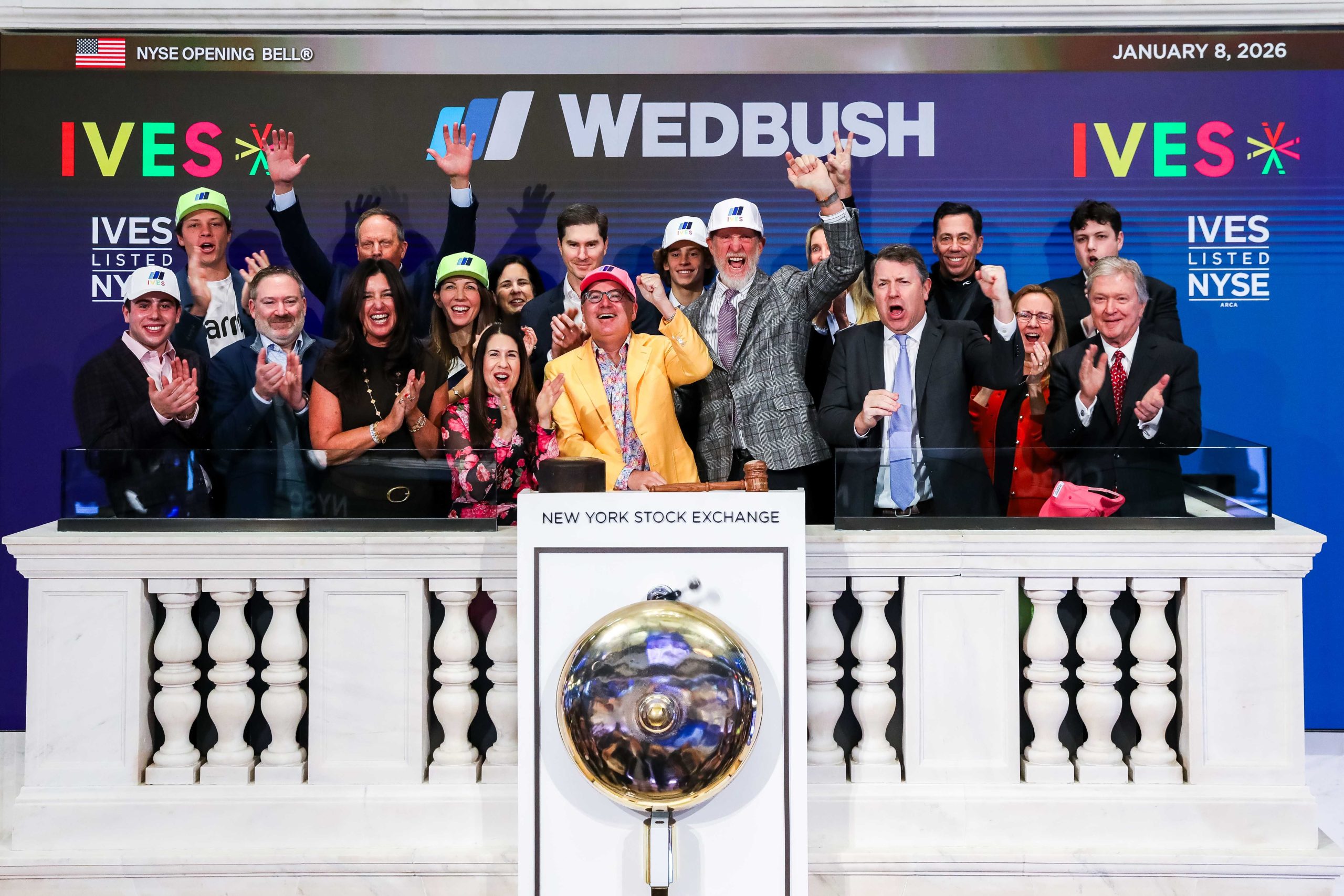
Ives isn’t exactly a shrinking violet. His colorful suits, gold watch and frequent television appearances have become nearly as familiar as his perma-bullish calls on the A.I. trade. His name also appears on an exchange-traded fund, giving the analyst a foothold in the investment products business even after leaving Wedbush.
Josef Schuster, founder of IPOX Schuster, which develops stock indexes and investment products, believes Ives’ visibility will continue to draw customers.
“He’s worked very hard and has a great track record in which he’s been right much more than wrong,” Schuster tells Observer.
There’s some evidence for the claim. TipRanks, which tracks analysts’ stock recommendations, gives Ives a success rate of about 58 percent and an average return of nearly 18 percent per rating. Those figures reflect historical recommendations tracked using a one-year holding-period model, not his results in 2026 alone.
Then there’s the Dan Ives Wedbush AI Revolution ETF, launched in June 2025. Ives may have left the brokerage, but the relationship hasn’t ended.
In an Oct. 8 announcement, Wedbush Fund Advisers confirmed that Ives continues to lead the research and company selections behind the Ives AI 30, now produced at Yorkville Ives. Wedbush remains the ETF’s investment adviser, and Ives’ latest research guides its portfolio.
For a man who made his name picking tech winners, several ways now exist to capitalize on that reputation. But those opportunities have brought another kind of attention.
The conflict-of-interest question
Ives’ extracurricular business interests have raised questions about whether an analyst can maintain independent research while taking on a growing collection of commercial relationships.
A Barron’s investigation earlier this year examined those overlapping roles. Mark Bradshaw, a Boston College professor, told the publication he was concerned that Ives’ affiliation with an ETF holding companies he covers could introduce financial bias into his research.
Wedbush defended Ives, describing him as an analyst with a strong record and considerable integrity. The firm told Barron’s that safeguards separated his research from the unit managing the ETF, and that Ives was prohibited from owning shares in the fund or its underlying stocks. Wedbush declined to provide additional comment for this story.
Ives’ other business interests have included a stint as chairman of Eightco Holdings, a cryptocurrency and technology investment company. He resigned from its board on March 10. He has also served as an adviser to marketing-technology company Zeta Global.
The sheer number of roles is unusual enough to invite scrutiny. Whether any particular relationship constitutes a regulatory conflict, however, is a separate question. The existence of those business interests does not, by itself, establish misconduct.
Ives also has a past encounter with securities regulators. In June 2022, the Securities and Exchange Commission (SEC) found that while serving as executive vice president of investor relations at Synchronoss Technologies, he helped negotiate a transaction that resulted in the company improperly recognizing approximately $3.6 million in revenue in 2016. Ives agreed to pay a $15,000 civil penalty and accepted a cease-and-desist order without admitting or denying the findings.
That case concerned corporate accounting, not his stock recommendations. But the distinction matters as Ives builds a merchant bank offering both financial research and investment-banking services.
In December 2025, the SEC consented to requests to remove the remaining requirements imposed on certain firms under the 2003 Global Research Analyst Settlement. That didn’t eliminate the rules governing research independence. The Financial Industry Regulatory Authority’s Rule 2241, which addresses conflicts involving research analysts and investment banking, remains in force.
Yorkville Ives is a registered broker-dealer and FINRA member. Its combination of research, advisory work and capital raising makes those safeguards relevant to its business. The relationships examined here raise legitimate questions about potential conflicts, but the reporting does not establish that Ives or Yorkville Ives has violated those rules.
If the A.I. trade goes south
Matthew Tuttle, founder of ETF issuer Tuttle Capital Management, sees plenty of potential in Ives’ expanding Wall Street brand. He also sees a risk.
“When people lose money, that is when the knives come out,” Tuttle tells Observer.
Ives’ bullish calls during the pandemic and the subsequent A.I. boom helped make him a Wall Street celebrity. But a prolonged downturn could put that reputation to a different test, especially if investors begin questioning the recommendations that helped build his following.
Tuttle isn’t surprised that Ives is making the most of his fame. Other prominent financial personalities are exploring similar opportunities, and Tuttle says his own firm has been talking with “a bunch of influencers” about launching investment funds.
“If you have a brand, you are going to try to build it as much as you can,” Tuttle says.
Kim Forrest, head of investment adviser Bokeh Capital, agrees that Ives’ reputation will ultimately depend on more than his personality. His recommendations will need to withstand scrutiny, especially if the A.I. trade loses momentum.
“Dan is a cheerleader but you have to be right as well as entertaining in this space,” Forrest tells Observer.
For now, Ives has the television audience, the recognizable name and a new merchant bank offering considerably more than stock recommendations. What he has yet to show is how many paying customers will follow him into this next chapter.
As Forrest puts it: “If you toss a coin and bet it will come back as heads, it better come back as heads.”