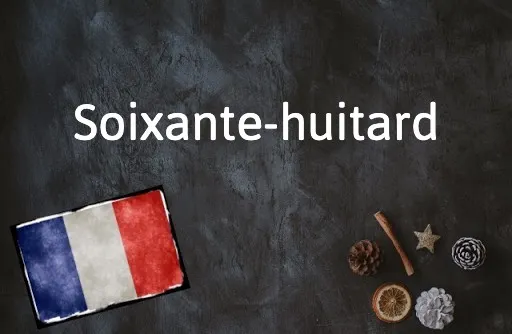
French Word of the Day: Soixante-huitard

About one in five people of a certain French generation can be described using this term.
Why do I need to know soixante-huitard?
Because it references a very important part of French history and culture.
Don’t miss our journalists’ daily news roundup from France
What does it mean?
Soixante-huitard – pronounced swah-sahnt wheat arr (listen here) – literally means sixty-eighter. While its translation might sound a bit like a sports team (like the Forty-niners), this term in French has an important political and social context behind it.
A soixante-huitard is someone who participated in the famous May 1968 protests in France. With the backdrop of the Prague Spring and the American Civil Rights Movement and anti-war protests, French students and striking workers demanded a more egalitarian world in May 1968.
This period of civil unrest lasted seven weeks and even forced then-President Charles de Gaulle to temporarily flee to West Germany. The events of this time have had a profound effect on French culture and politics.
Around 11 million people – 22 percent of the population at the time – were involved in some way or another, and these days, those people are referred to as un soixante-huitard or une soixante-huitarde (for a woman).
Though the term is typically reserved to refer to those actually involved in the protest movement, it can occasionally be used as a way to describe someone who has held onto the far-left ideas or sentiments from the 1968 movement.
You might be hearing it more than usual at the moment, as some in the current French lycée student protests refer to themselves as the heirs of May 1968. You may even have seen placards saying ‘the 6-7 generation remaking 68’ (referencing the viral TikTok 6-7 trend popular with the youth of today).
Use it like this
Il a gardé ses convictions d’extrême gauche longtemps après 1968. C’est un vrai soixante-huitard. – He held onto his far-left beliefs long after 1968. He is a true sixty-eighter.
Tu pourrais être surpris que ta tante ait une soixante-huitarde. Ses opinions ont certainement changé avec le temps. Tu ne l’aurais jamais deviné ! – You might be surprised that your aunt participated in May 68. Her opinions have really changed with time, you would never have guessed it.