
Column: The fates of Jane Doe and Nolan Wells leave us longing for the Golden Rule
It is easier to build strong children than it is to repair broken men. A beloved Republican by the name of Frederick Douglass said that.
None of us know exactly when or where those words were uttered, but we do understand why. It is hard to believe that the rise of the English word “inhumane” in the 1800s and the rise of the abolitionist movement in America during that same period was mere coincidence.
The disease that was the institution of slavery required brokenness in men for survival. Douglass’ words were both a diagnosis and treatment plan for healing, explaining how depravity gets passed down from one generation to the next along with what could prevent it from recurring.
But what does it mean to raise strong children?
To repair broken men?
Nearly 60 members of a Cornell fraternity received a text message that read “free pussy” and did nothing to help the alleged victim, according to her lawsuit. In fact, there are text messages between the young men that suggest they were more concerned about themselves.
Nolan Wells went to hang out with a group of friends on the Fourth of July, and everyone came back home alive except for him. Wells was the only person of color seen in images from that day on a small, undeveloped island off the coast of Mississippi — and the grand jury believed it was an accidental drowning and declined to pursue criminal charges.
The state and independent autopsies found no evidence of drowning; there was no water in his stomach, lungs or throat. The autopsies did find bruising on the back of his head, left shoulder and back. This week President Trump said he is considering asking the FBI to investigate the death. We’ll see if he follows through. He tends to use the Justice Department for his own interest first, the sake of justice second. Of course we all fudge the line between doing what’s best for ourselves and doing what is best, but the health of a society depends on our willingness to err on the side of the latter as much as possible. Doing what is best for the whole is the foundation for a cooperative society.
Laws, no matter how well intended, are only as strong as people’s beliefs in them. And there is no higher law in life than the one that says we are to treat each other as we wish to be treated.
That’s true with Christianity: “Therefore all things whatsoever ye would that men should do to you, do ye even so to them” (Matthew 7:12). Islam: “None of you truly believes until he loves for his brother what he loves for himself.” Hinduism: “One should never do to another what one regards as harmful to oneself.” And Buddhism: “Hurt not others in ways that you yourself would find hurtful.”
A person must separate themselves from that universal law to wish or inflict harm. A person must detach from their own humanity to witness inhumane treatment of others and feel nothing.
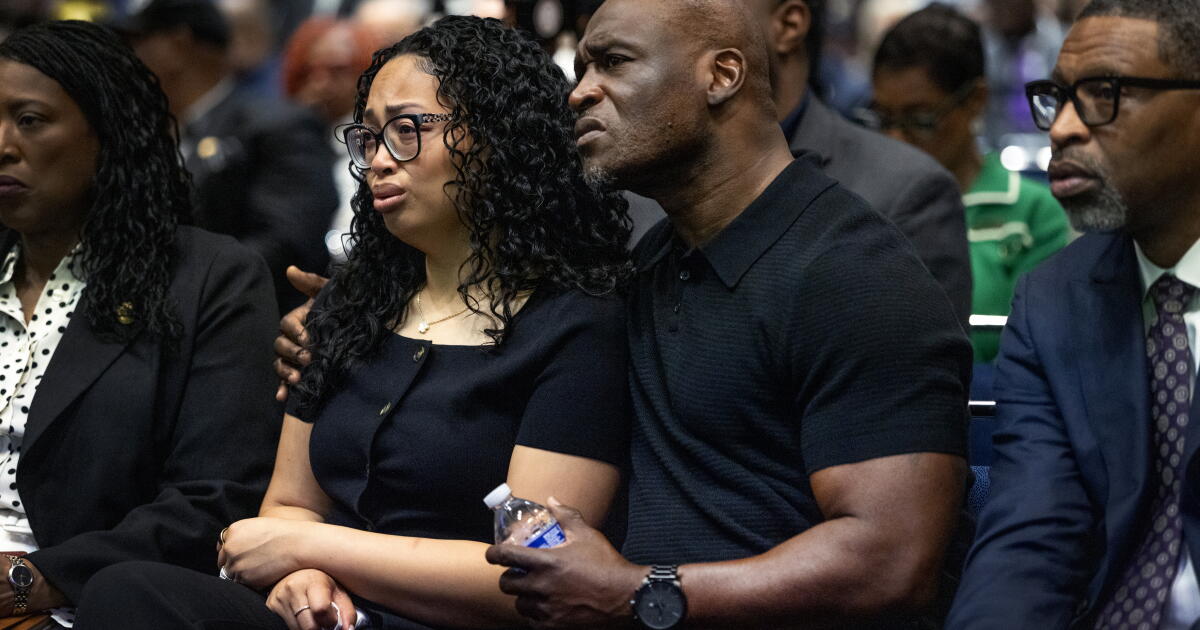
“A couple of days ago I was awaken at 3 o’clock in the morning.… I heard the word ‘Dad’ and it woke me up and I just ached,” Wells’ father, Elmore Wonsley, told the congregation at Second Baptist Church last Sunday. He and his wife, Christine Wells-Wonsley, and civil rights attorney Ben Crump, visited the church seeking support. “I pray to God that he helps me keep my emotions in check because as a father, you want to protect your family.”
A sentiment that’s easy to understand for anyone who has ever cared for a child.
Babies do not come out that way. When human life is brought into the world, touch is the sense newborns need most for survival. We are taught to separate from touch and each other over time. Especially men. That is why Douglass said it is easier to teach children to never forget our humanity. Never forget we are brothers and sisters because there are things in this life that will try to convince you otherwise. It takes internal fortitude to hold on to the universal law, to care about what happens to one another, when it’s far easier to let go. To look away. To look after yourself.
A person can live some semblance of a comfortable life in that way, I suppose.
But a society that is built using that kind of moral compass is lost.
YouTube: @LZGrandersonShow
Insights
L.A. Times Insights delivers AI-generated analysis on Voices content to offer all points of view. Insights does not appear on any news articles.
Viewpoint
Perspectives
The following AI-generated content is powered by Perplexity. The Los Angeles Times editorial staff does not create or edit the content.
Ideas expressed in the piece
- The column argues that the cases of Jane Doe and Nolan Wells point to a broader failure of empathy: when people put self-interest ahead of another person’s welfare, bystanders can become complicit in harm and communities lose faith in their laws and institutions.
- It presents the Golden Rule as a shared moral obligation, drawing on teachings from several religions and Frederick Douglass’s emphasis on raising children to preserve their humanity. The piece contends that compassion and solidarity must be taught and practiced, especially when looking away is easier.
- The column connects that principle to the anguish of Wells’ parents and their demand for answers, and questions whether the grand jury’s decision can settle the larger moral and public concern surrounding his death.
Different views on the topic
- In the Wells case, the grand jury concluded that it found no credible evidence of criminal conduct by people who traveled to or from the island with him, and said the circumstances were consistent with drowning. Both the state and independent autopsies listed the cause and manner of death as undetermined; the grand jury’s finding was not a definitive medical determination of the cause.[1][3]
- The Wells family and its attorneys dispute that the grand jury’s decision resolves what happened. They point to unexplained injuries and the undetermined autopsy findings, and have called for continued scrutiny and a federal investigation.[2][4]
- In the Cornell case, the allegations remain disputed and have not been established in court. At least one defendant’s attorney denied that the client participated in an assault, while Cornell says its investigations resulted in sanctions, including suspensions and expulsions, and that the fraternity chapter remains barred from campus.[5][6]