
Food-Tax Cut Faces Fiscal Test In Diet
TOKYO –
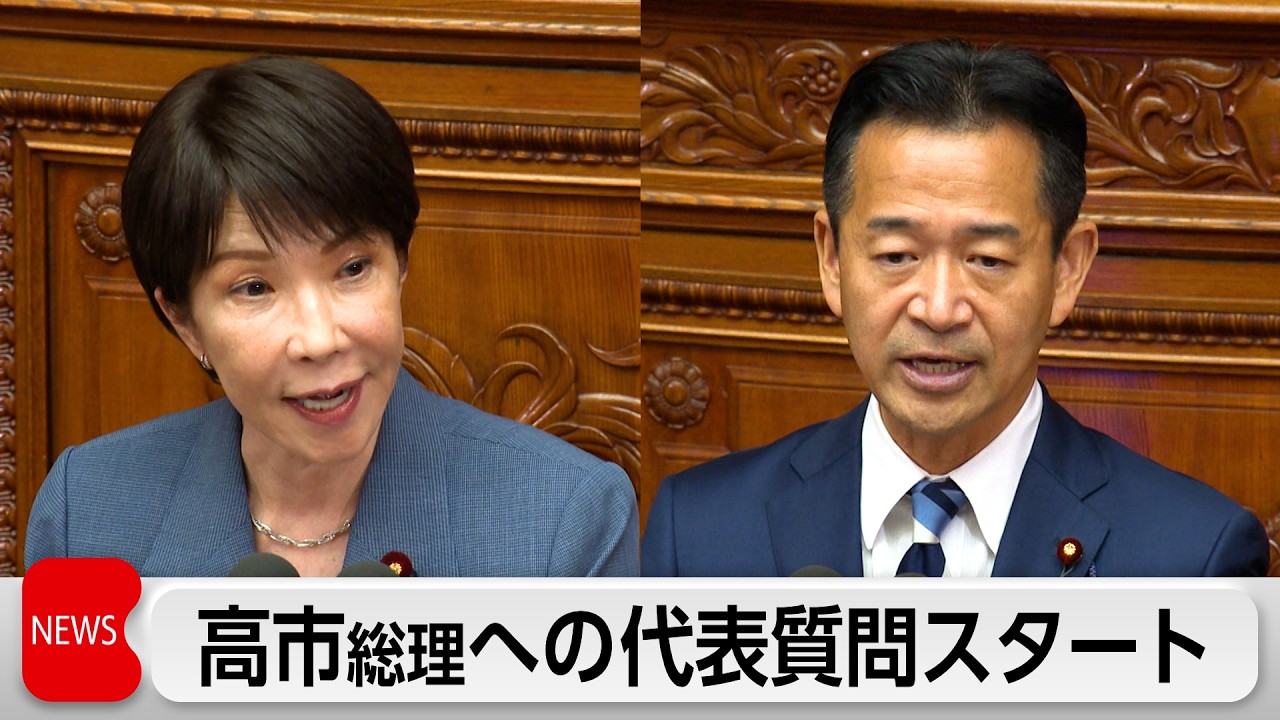
Prime Minister Sanae Takaichi defended her plan to cut the consumption tax on food and provide support payments to workers in the House of Representatives on October 7, seeking to keep household relief at the center of her autumn Diet agenda while markets continue to test the government’s fiscal credibility.
Takaichi told lawmakers that the government’s proposed tax cut and payments are intended to help households cope with rising prices and ensure that workers feel the benefits of economic growth. Her remarks came as opposition parties pressed the administration over how it plans to fund the measure without increasing Japan’s already heavy debt burden.
The government plans to reduce the consumption tax on food and beverages from 8% to 1% for two years beginning in April 2027. It also plans to provide payments that would effectively cover the remaining 1% burden during the period. The policy is the administration’s main answer to voter frustration over food prices, which have become one of the clearest daily signs of inflation for households.
The political appeal is straightforward. Food prices affect almost every household, and a tax cut is easier to explain than a more complex subsidy program. Takaichi wants the measure to show that her government is not focused only on defense, industrial policy and the yen, but is also addressing daily living costs.
But the fiscal explanation remains incomplete. The tax cut is expected to create a large revenue shortfall, and Finance Minister Satsuki Katayama has repeatedly said the government will avoid deficit-financing bonds. That pledge is politically necessary because bond investors are already concerned about Japan’s debt trajectory, but it leaves the government under pressure to present a credible alternative funding plan.
Takaichi has tried to reassure markets by promising to control new bond issuance and respond quickly if financial instability emerges. In her policy speech to parliament this week, she emphasized fiscal discipline while also defending targeted spending for growth, economic security and household relief. The message was designed to tell investors that her administration’s active fiscal stance does not mean abandoning budget restraint.
The bond market remains unconvinced enough to keep pressure on the government. Japan’s long-term borrowing costs have risen sharply as investors weigh higher inflation, reduced Bank of Japan bond purchases and concern over future debt issuance. Thirty-year Japanese government bond yields recently rose to record levels, while 10-year yields have remained near multi-decade highs.
That matters politically because higher yields make Takaichi’s agenda more expensive. The government is trying to cut food taxes, support households, expand defense, strengthen economic security and promote a 370 trillion yen public-private investment roadmap through fiscal 2040. Each policy has a clear political rationale, but together they raise the question of how much the state can promise while borrowing costs are rising.
The Bank of Japan is now central to that debate. New BOJ Policy Board member Ayano Sato, previously viewed as one of the more cautious voices on tightening, has signaled support for gradual future rate hikes if economic data continue to justify them. Her comments suggest that even dovish members may be moving toward acceptance of further normalization as inflation risks persist.
Sato opposed the BOJ’s September rate hike to 1.25%, citing weak consumption and slow movement in some underlying price measures. But she has since acknowledged that inflation risks are tilted upward, partly because rising oil prices and global energy uncertainty could keep import costs high. She said rate adjustments should proceed in stages and depend on consumption and income trends.
Her position is important for Takaichi because it narrows the government’s room to assume that the BOJ will remain cautious. If more board members accept gradual hikes, the central bank may keep policy on a tightening path even as the government worries about borrowing costs and growth.
A stronger BOJ stance could help support the yen and reduce import-driven inflation, which would be politically helpful for households. But higher rates also increase debt-servicing costs, pressure bond markets and complicate the government’s fiscal plans. This is the core tension facing Takaichi: the same monetary tightening that can help stabilize prices may make her tax and spending agenda harder to finance.
Currency markets are reflecting that tension. The yen weakened as the dollar strengthened on October 7, with investors focused on U.S. Federal Reserve policy, higher oil prices and the possibility that Japan’s rate path may be slower than some had expected. Rising oil prices are especially uncomfortable for Japan because the country depends heavily on imported energy, making the exchange rate directly relevant to household bills and business costs.
Takaichi has argued that the best way to support confidence in the yen is to raise Japan’s economic competitiveness. Her government says strategic investment in areas such as artificial intelligence, semiconductors, shipbuilding, energy, space and quantum technology will strengthen the economy’s supply capacity and improve long-term confidence in the currency.
That argument is central to Takaichi’s economic policy. She wants to show that Japan can support households in the short term while rebuilding industrial strength over the long term. But markets are likely to keep asking whether the government can fund that transition without relying on debt or pressuring the BOJ to keep financial conditions loose.
The government is also considering another supplementary budget, this time focused mainly on disaster relief and reconstruction after earthquakes and heavy rain. The proposed package is expected to be relatively small compared with previous stimulus budgets and could be compiled in November for passage early next year.
The move may be politically easier to defend than broad economic stimulus. Disaster relief is generally seen as necessary spending, and Takaichi has previously said she wants to reduce reliance on frequent large supplementary budgets. A narrowly focused disaster package would allow the government to respond to affected areas while trying to maintain its message of fiscal restraint.
Still, even a smaller extra budget adds to the impression that spending needs are multiplying. The administration already faces demands for tax relief, defense spending, reconstruction, social security and growth investment. The challenge for Katayama will be to explain how each package fits within an overall borrowing plan that investors can accept.
Business sentiment presents a mixed picture. A Reuters Tankan poll showed major manufacturers’ confidence at its highest level in nearly five years, helped by semiconductor-related demand and strength in precision machinery. But service-sector sentiment weakened sharply, with food producers hit by raw material costs and subdued consumer spending.
That split is politically important. It gives Takaichi evidence that parts of the manufacturing and technology economy are responding to the government’s growth themes. But it also shows that households and domestic service industries remain under pressure from inflation and weak purchasing power.
The opposition is likely to focus on that divide. It can argue that the government is highlighting semiconductor demand and strategic investment while ordinary households and food-related businesses continue to struggle. Takaichi will counter that the tax cut, payments and investment roadmap are designed to bridge that gap by delivering relief now and growth later.
The Diet debate is therefore moving toward a credibility test. Opposition parties will press the government on when the food-tax cut will take effect, how the support payments will be distributed, how the revenue loss will be covered, and whether the policy can truly remain temporary. They will also ask whether higher bond yields and BOJ tightening make the government’s plans less realistic.
Takaichi’s advantage is that the policy is easy for voters to understand. Cutting the food tax from 8% to 1% gives the government a direct message on prices. Her difficulty is that the same simplicity makes the funding problem more visible. If the administration cannot explain where the money will come from, the tax cut may become a symbol of fiscal risk rather than household relief.
The October 7 political picture shows Takaichi trying to keep control of the cost-of-living agenda while protecting market confidence. The government wants voters to see tax relief and worker support. Investors want a funding plan and limits on bond issuance. The BOJ wants room to respond to inflation. Opposition parties want to frame the tax cut as a promise made before the money was found.
The central question is whether Takaichi can connect the pieces before the Diet debate hardens. If Katayama presents credible funding, if the BOJ’s gradual tightening stabilizes the yen without shocking bond markets, and if disaster relief remains narrowly focused, the government may be able to defend its autumn agenda. If yields rise further or the tax-cut funding remains vague, the food-relief plan could become the main point of attack against Takaichi’s economic leadership.
What To Watch Next
The Diet debate over the food-tax cut will remain the main domestic political focus, especially the funding structure and timing of worker support payments.
Finance Minister Satsuki Katayama will face pressure to explain how the government can avoid deficit-financing bonds while covering the tax-cut revenue shortfall.
BOJ communication will be closely watched after Ayano Sato signaled support for gradual future rate hikes despite opposing the September move.
The yen remains a key political signal, especially as higher oil prices increase Japan’s import burden.
The possible disaster-relief extra budget will test whether Takaichi can respond to reconstruction needs while keeping supplementary spending limited.
Bond yields remain the most important market indicator for the government’s fiscal credibility.
Opposition parties are likely to connect the food-tax cut, bond-market pressure and BOJ independence into a broader attack on Takaichi’s economic management.