
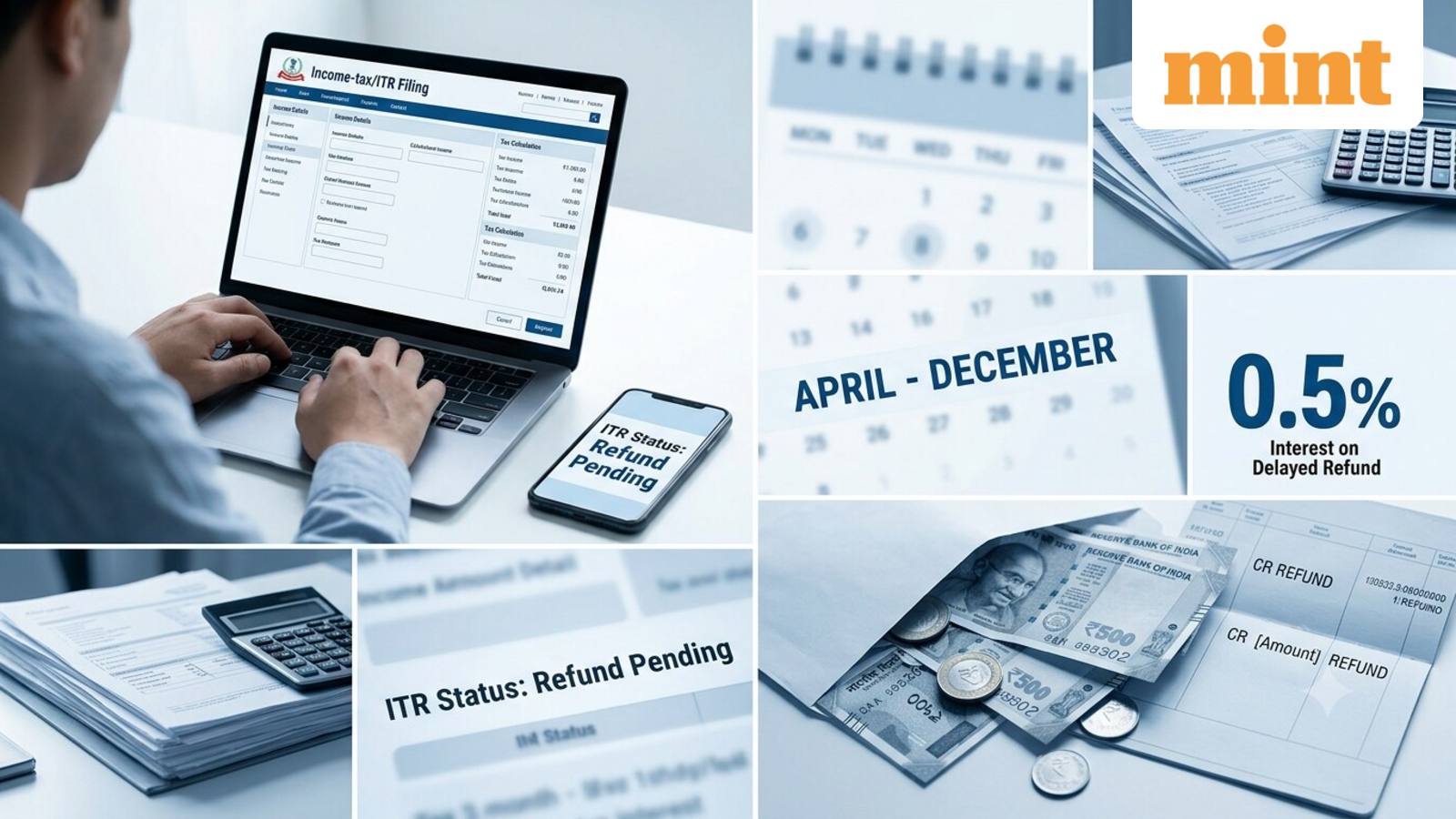
Are you eligible for interest on your ITR refund? Experts explain income tax rules, calculations and key conditions
Taxpayers who filed their ITR in July 2026 and are still waiting for a refund may be eligible for interest on the amount. However, eligibility for interest is not determined simply by how long the refund has been delayed.
According to Section 244A of the Income Tax Act, 1961, “The period for which interest is payable shall depend on the type of tax out of which the refund arises and the date of furnishing return of income.”
So, when does a taxpayer become eligible for interest on an income-tax refund, and how is the interest calculated? Here’s what experts have to say.
When is a taxpayer entitled to interest on a delayed ITR refund?
Siddharth Maurya, Founder and Managing Director, Vibhvangal Anukulara said, “A taxpayer is entitled to interest if a refund is granted to him/her at a later date when it is already due.”
For refunds arising from excess TDS, TCS or advance tax, where the return is filed within the prescribed due date, interest is calculated from 1 April of the assessment year until the date the refund is granted. However, interest is not payable if the refund is less than 10% of the tax determined, he added.
Filed ITR in July 2026 but refund is still pending: Will you get interest?
Yes. Maurya said, “A taxpayer is eligible for interest on the refund under Section 244A if the return was filed in July 2026 and a refund is ultimately determined to be payable.”
However, waiting for a refund does not mean interest is payable. Generally, interest is calculated and paid along with the refund, he added.
How is interest on an income-tax refund determined?
Isha Sekhri, Founder, Isha Sekhri & Associates LLP, said: “The rate is 0.5% per month or part of a month (6% p.a.), simple interest, on the refund amount.” Start date depends on the source of the refund as follows:
- Excess TDS/TCS/advance tax: If filed on or before the due date, interest runs from 1 April of the year following the tax year. If filed late, from the date of filing.
- Excess self-assessment tax: From the date of filing or payment, whichever is later. This applies when a taxpayer has paid extra tax while filing the ITR.
How is interest on an income-tax refund calculated?
Sekhri explained that two rounding rules apply first: part-month counts as a full month, and the principal is rounded down to the nearest ₹100. The final refund is separately rounded to the nearest ₹10.
For example, suppose a taxpayer has a ₹50,000 refund arising from excess TDS. The tax determined is ₹4 lakh, and the ITR is filed in July within the due date:
- Refund: ₹50,000
- Tax determined: ₹4 lakh
- 10% of tax determined: ₹40,000
- Since the refund of ₹50,000 exceeds ₹40,000, the taxpayer meets the 10% threshold for interest.
- Refund date: 15 December 2026
- Interest period: 1 April 2026 to 15 December 2026. This covers eight months and part of another month. Since part of a month is counted as a full month, interest is calculated for nine months.
- Interest: ₹50,000 × 0.5% × 9 = ₹2,250
- Total refund: ₹50,000 + ₹2,250 = ₹52,250
When can interest on a refund be reduced or denied?
Sekhri mentioned the following conditions:
What should you do if the interest is not paid?
Sekhri suggested the following steps:
- Rectification: File an application under Section 154 of the 1961 Act if interest was miscalculated or omitted.
- Grievance: Raise it on the e-Nivaran portal if rectification doesn’t resolve it.
- Ombudsman: If unresolved, escalate to the Income Tax Ombudsman, citing delay in refund issuance or in disposing of the rectification application.
Disclaimer: This is only for informational and educational purposes. Please consult a qualified expert for the latest laws and regulations.