Vail ski resort pioneer George Gillett dies at 87
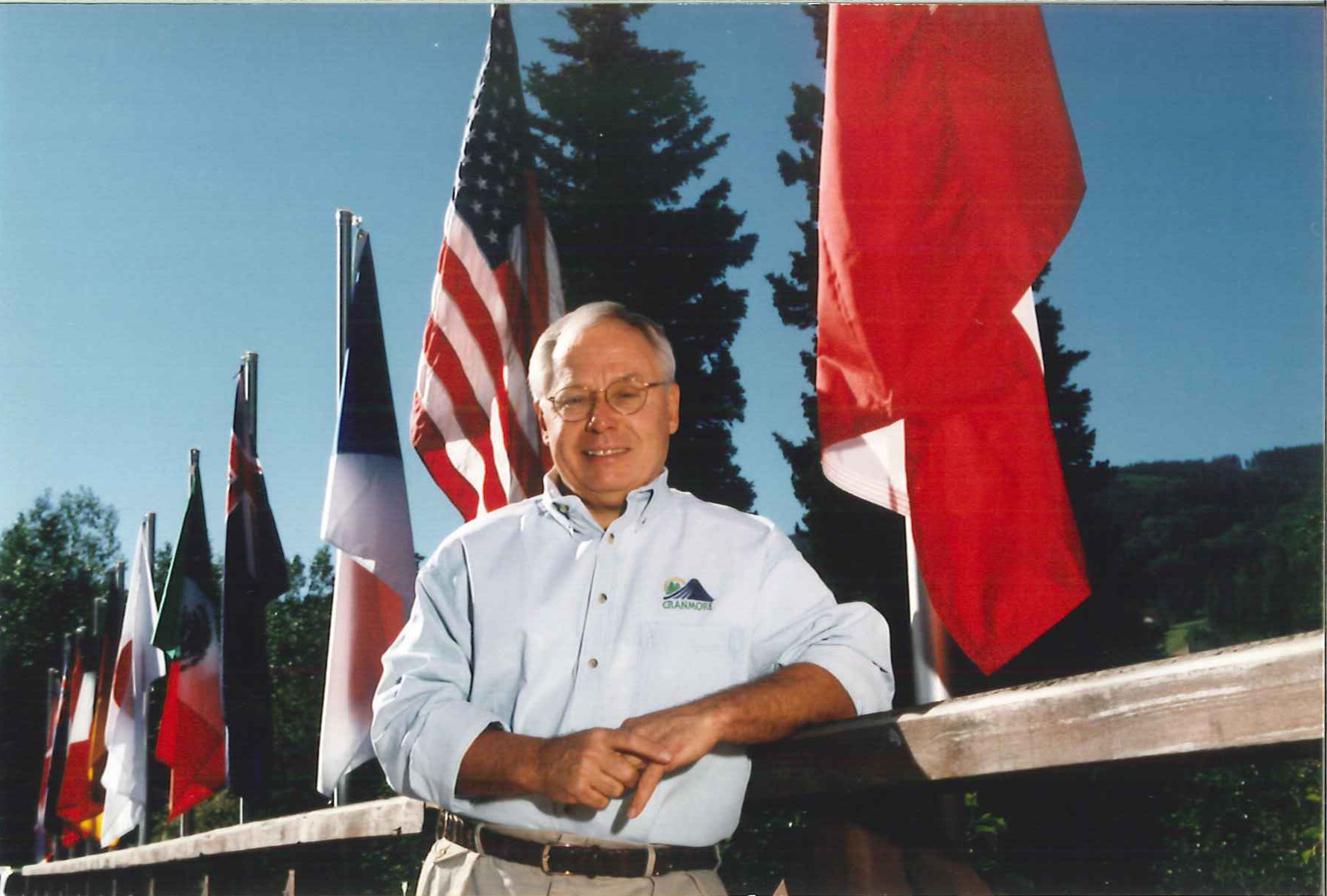
George Gillett Jr., a meatpacking and media magnate whose ownership of Vail and Beaver Creek ski areas in the early 1990s shifted the resort industry into an era of modernization, died Sept. 22 at age 87 after several years enduring Alzheimer’s disease.
This story first appeared in The Outsider, the premium outdoor newsletter by Jason Blevins.
In it, he covers the industry from the inside out, plus the fun side of being outdoors in our beautiful state.
While consolidation and advance season-pass sales have transformed the resort industry in the last two decades, the path to this age was, in many ways, paved by Gillett, who bought Vail and Beaver Creek in 1985.
He was a fixture on the slopes that first season as owner, skiing more than 130 days. Everyone called him George. He was one of the last of a bygone breed: the resort owner who skied daily and knew the lifties, patrollers, groomers, cafeteria workers and instructors by name. He fostered a community around his ski areas, enlisting both employees and guests in his vision.
And that vision was big. When Gillett opened China Bowl at Vail ski area in 1988, he doubled Vail’s acreage, making it the largest ski area in North America. He brought the World Alpine Ski Championships to Vail in 1989 after a nearly 40-year absence in the U.S. By 1990, Vail had more high-speed chairlifts than any other ski area.
Harry Frampton was president of Vail Associates from 1982 to 1986, overlapping a year with Gillett. Toward the end of his tenure, he helped develop a five-year plan for the Vail and Beaver Creek ski areas. Gillett loved the plans, but he wanted one step pushed to the front.
“We had China Bowl being built at the backend of our five-year plan and George said, ‘Let’s move that up to the beginning,’” Frampton said. “He knew the back bowls were what distinguished Vail from many other ski areas and China Bowl was for lower-intermediates and it would allow such a broader base of skiers to experience what is very special about Vail.”
That expansion is a highlight in Gillett’s legacy, but he had other large impacts that are often overlooked, Frampton said. Mike Shannon, a principal with KSL Capital Partners, which co-founded Alterra Mountain Co., was president of Vail Associates under Gillett, from 1986 to 1992. Gillett and the 20-something Shannon were instrumental in luring knee specialist Dr. Richard Steadman to Vail from Lake Tahoe, helping to seed what would become one of the world’s top orthopedic clinics and research centers.
Gillett also saw “tremendous opportunity” in the Eagle County Regional Airport, Frampton said, and worked with the community to grow that facility with more direct flights into the valley.
“Each generation of leaders has done some really great things at Vail and Beaver Creek and George certainly played a role in a lot of what I call legacy projects,” Frampton said.
Gillett pushed Vail Associates’ profits to $45 million in 1991 from $5 million in 1985. He was a billionaire by age 50, with a growing list of meatpacking businesses and television stations in his control. But he lost everything — including the Vail and Beaver Creek ski areas — in a bankruptcy in 1991 as interest rates soared and a long list of leveraged purchases spiked his bills.
He remained at the helm of Vail Associates until the company went public in 1997, setting the course for today’s Vail Resorts 43-hill, three-continent empire.
A decade after that humiliating bankruptcy, he was back, with ownership of the National Hockey League’s Montreal Canadiens, the Grand Targhee ski area in Wyoming and a stake in the nation’s largest beef processor.
In 2001, he stood atop a tubing hill at his Grand Targhee ski area with a beer in his hand and challenged a reporter to a race, which he won. Decades later, even as his memory faded, he would remind the reporter about that loss.
He still smarted about his decision to consolidate debt that became unwieldy. At the end of 1990, he had a pile of debt financed around 7%, he said. By the middle of 1991, interest rates had tripled.
“And as optimistic as I was and as good as our businesses were, we just couldn’t go fast enough, and ultimately what happened happened,” he said in 2001.
Scarred, but still innovative
But the bankruptcy was a scar.
“It was a mistake, and I’ve acknowledged it publicly. I have accepted full blame and make no excuses. The mistake was mine,” he said in 2001. “I put myself and my family through hell. Bankruptcy takes away your reputation, and it takes away your self-confidence.”
He lost his stuff but not his talent. His Avon-based Booth Creek Holdings was the fourth largest ski resort operator in the country by 2000, with seven ski areas in Wyoming, California, New Hampshire and Washington.
That year, he stepped back and bought Grand Targhee from Booth Creek Holdings and started running the ski area with the oldest of his four sons, Geordie Gillett.
He sold the Canadiens and the team’s arena to the Molson family in 2009.
For the last few decades, whenever Gillett spoke about his business successes, he heaped credit on his family, including his wife of 59 years, Rose, and their sons Geordie, Alex and twins Foster and Andrew, who died in 2011.
Rob Katz, the CEO of Vail Resorts, said in a statement that many skiers may not know how Gillett influenced their experience through his philosophy. “That how you treat people, guests and employees alike, is what matters most in business,” Katz wrote.
“George leaves behind an incredible legacy of vision, innovation, and leadership, as well as a generation of leaders who are grateful to have learned from him along the way,” Katz said.
Pat Peeples spent a decade managing communications for Vail Associates, including the Gillett years, and then worked directly with the Gillett family for the last three decades.
In the week since Gillett’s death, she’s been inundated with calls and interactions with friends and strangers, all wanting to share “George stories.”
“I’m absolutely floored by how many individual lives he changed,” Peeples said.
She remembers working with Gillett at Vail ski area and how he pushed his team to come up with new ideas to help establish the ski area as a top destination. His focus was squarely on the guest, who, when they bought a pass, felt they had ownership in the ski hill.
He crafted a plan to enlist Disney’s Goofy as a mascot for kids in ski school. He built Trapper’s Cabin in Beaver Creek, setting the stage for a high-end ski experience that now permeates nearly every resort.
“No idea was too zany. No ask was too large. Everyone felt completely at ease with just taking risks and doing fun, crazy things if it kept the vision of making it the best ski resort — the most family-friendly ski resort — in the world,” Peeples said. “Everyone he was around, he would just elevate them, empower them.”
He would tell her: “Pat, you work for the best ski area in the world, I want you tipping 30% when everyone is tipping 10,” she said. “Anyone who lived in the Vail Valley from 1985 to 1992, their lives were changed by the community culture he built.”