Sotheby’s to Sell $450M Blaquier Collection Led by $180M Van Gogh
With Armory Week officially opening the fall market season in New York, auction houses are rolling out, one after another, the major collections headed for their rostra in November. Following Sotheby’s scoring Dick Hedreen’s $90 million trove and Christie’s securing the Herbert Lust Collection, the former has unveiled the season’s biggest consignment so far: a $450 million group described as the El Dorado of collections, comprising a mere 12 long-unseen masterpieces from Argentine collectors Carlos Pedro Blaquier and Nelly Arrieta de Blaquier.
Leading the group is a stunning Van Gogh, Châtaignier en fleurs roses et blanches, which alone is expected to fetch $180 million, a price that would shatter the artist’s auction record. Van Gogh painted the work in the village of Auvers-sur-Oise, where he spent the final two months of his life after leaving the asylum at Saint-Rémy. Ranked alongside MoMA’s The Starry Night, the Musée d’Orsay’s The Church at Auvers-sur-Oise and Wheatfield with Crows, now at the Van Gogh Museum in Amsterdam, the canvas carries a new optimism, transforming the tumultuous, thickly impastoed agitation of the preceding months into a spark of life and energy and shifting toward vibrant tones that celebrate the lush, blossoming greenery of the French countryside. Writing to his brother that year, Van Gogh described how the “beautiful greenery in abundance” was reawakening his drive to paint: “the desire to work will devour me and make me insensible to everything else and in a good mood.”
Its provenance makes the painting even more extraordinary. After Van Gogh’s death in July 1890, the work passed to his brother Theo, then to Theo’s widow, Johanna van Gogh-Bonger, and their son, Vincent Willem. Following a period in the family’s possession, it entered the collection of Samuel Fischer, founder of the publishing house S. Fischer Verlag, which first published literary figures including Thomas Mann, Hermann Hesse and Arthur Schnitzler. Another celebrated owner was George “Buddy” Gard DeSylva, the American songwriter, film producer and co-founder of Capitol Records. In 1953, the painting was purchased by Harriet Harris-Jonas, whose collection was so renowned that the Metropolitan Museum of Art arranged tours for patrons to view it in her Fifth Avenue apartment. The Blaquiers acquired the work from Wildenstein in 1975, and it has not been exhibited publicly since.
Also expected to set a new artist record is Cézanne’s Arlequin, a large-scale portrait of his son in costume inspired by the joyous Mardi Gras processions the artist joined as a child in Aix-en-Provence. Painted between 1888 and 1890, in the same period that produced the iconic The Card Players—one version of which reportedly sold to Qatar in 2011 for $250 million, then the highest price ever paid for a work of art—the painting is estimated at $120 million. Only one other version of Arlequin has ever appeared at auction: a smaller example from 1890 sold at Sotheby’s in 1988 for $8 million and is now in the collection of the Pola Museum of Art in Kanagawa.
This Arlequin also boasts a distinguished exhibition history, having appeared in some of the most important Cézanne shows of the past century, including the Salon d’Automne in Paris in 1907, the Museum of Modern Art in New York in 1929, the Art Institute of Chicago in 1952 and Tate in London in 1954. Over the years, the canvas passed through the hands of the movement’s most renowned dealers, including ambroise vollard, Durand-Ruel, Paul Rosenberg, Wildenstein and London’s Lefevre Gallery, from which the Blaquiers bought it in the 1970s after it had hung in Merton Hall, the Rothschild family’s mansion in Cambridge.
Further highlights include Pierre-Auguste Renoir’s En Canot (Jeune fille à la barque) (est.: $25-35 million), a boating scene painted in the summer of 1877, around the time of his masterwork Bal du moulin de la Galette, now at the Musée d’Orsay. Also in the trove are Camille Pissarro’s grand Parisian streetscape La Place du Théâtre-Français, soleil d’après-midi en hiver (est.: $30-40 million), and Edgar Degas’s Avant la course (est.: $20-30 million), which is considered the largest fully worked pastel of a horse-racing scene. None of the three has ever been offered at auction.
The Degas first belonged to Connecticut industrialist Harris Whittemore, one of the earliest American collectors of Impressionist art, before entering the collection of Sidney F. Brody and his wife, Frances Lasker Brody, two of L.A.’s most important collectors of modern art, who played a key role in the development of the Los Angeles County Museum of Art.
Completing the group are two early Impressionist landscapes—Claude Monet’s Le Jardin des Tuileries (est.: $15-20 million) and Alfred Sisley’s La Seine à Port-Marly—as well as Gauguin’s Fleurs dans une coupe (est.: $10-15 million), one of the few still lifes he painted during his final years in Tahiti; a captivating Toulouse-Lautrec portrait; a second, earlier work by Pissarro; and two vibrantly saturated Fauve paintings by André Derain and Maurice de Vlaminck.
Also dubbed a “mini Musée d’Orsay,” this once-in-a-century collection had long been whispered about and coveted by both major auction houses. “For decades now, the Blaquier-Arrieta collection has been the stuff of legend: whispered about, kept from public view, it has attained an almost mythical status in the art world,” Philip Hook, author of The Ultimate Trophy: How Impressionist Painting Conquered the World, said in a statement, calling it one of the last great private collections of Impressionist and Post-Impressionist art. “It was formed when major examples by the great names were still within reach. Its re-emergence now marks a historic moment for the market.”
“The collection comes at a moment of renewed demand for blue-chip Impressionist and Modern masterpieces, as collectors increasingly seek works of the quality and rarity typically found in major museum collections,” Simon Shaw, Sotheby’s senior advisor, Impressionist and Modern art, told Observer.
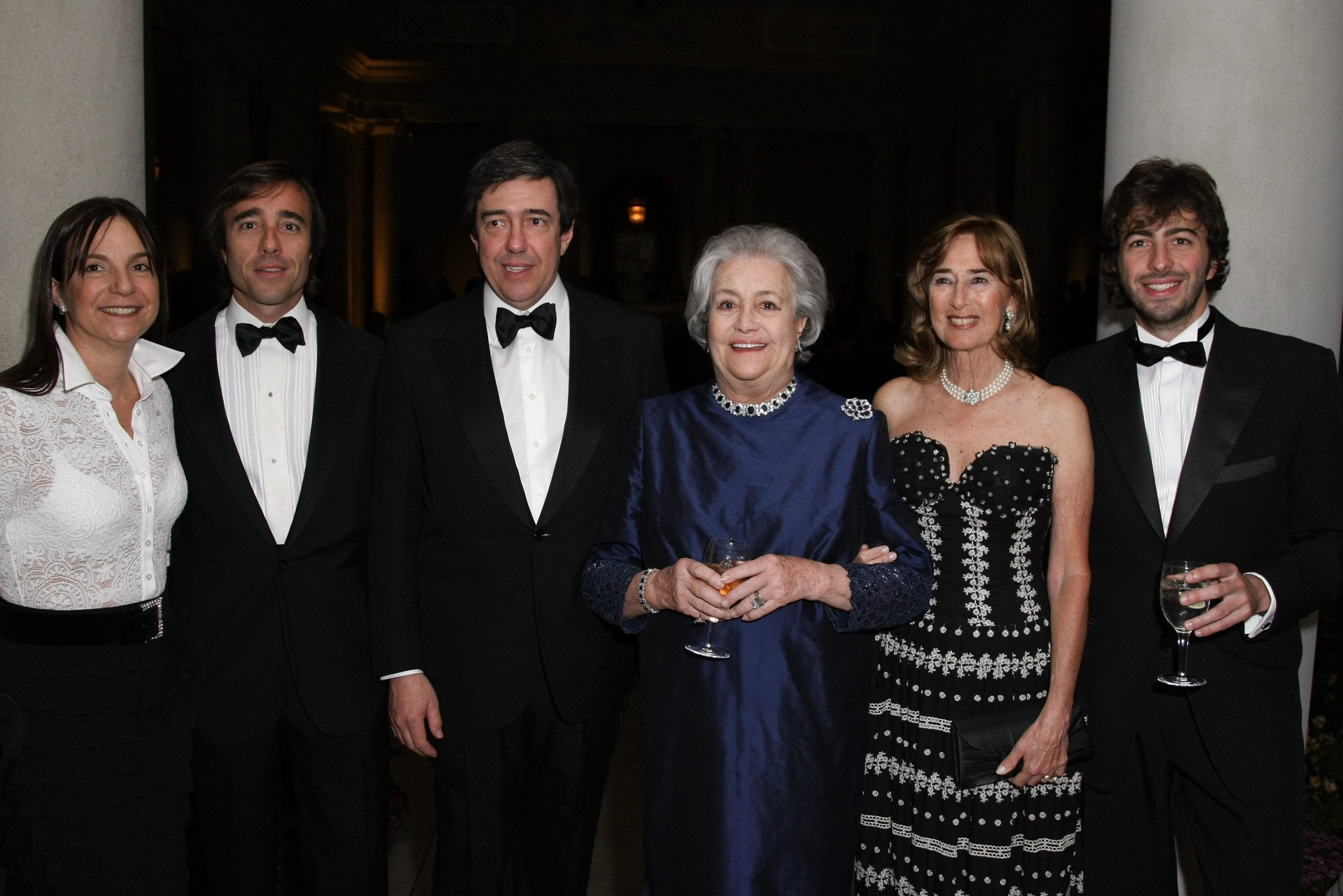
The collection reflects the vision and taste of a single family, above all Nelly Arrieta de Blaquier, who played a central role in shaping it. “Acquired during the family’s regular trips to London, New York and Europe, the works reflect a focused pursuit of the greatest Impressionist and Post-Impressionist masters,” Shaw said. “Together, they chart the development of modern art through artists who helped define it, with the collection notably anchored by both Van Gogh and Cézanne, a particularly rare combination in a private collection.”
Sotheby’s will first present a selection of highlights at its Bond Street galleries in London this October before the works embark on a global tour. “The collection remained in private hands for decades, with many of the works hanging in the family’s residences and seen only by a limited circle of visitors,” explained Shaw. The London debut is fitting: many of the works were acquired there in the 1970s from renowned dealers such as Lefevre Gallery, while others came through leading New York galleries, including Wildenstein and Acquavella. “This long-held, single-owner provenance adds significantly to the collection’s appeal and helps explain its legendary status within art-world circles.”
The Blaquier fortune
The Blaquiers’ fortune came primarily from Ledesma, their vast family-controlled sugar and agroindustrial company. Born in 1931, Nelly Arrieta Wollmann came from one of the families that controlled Ledesma and, as the only daughter, became the principal heir to her branch of the fortune. In 1951, she married Carlos Pedro Blaquier, himself the scion of a prominent landowning family. They had five children—María Elena, Carlos Herminio, Alejandro, Santiago and Ignacio—before separating decades later. Carlos Pedro Blaquier served as Ledesma’s president for 43 consecutive years, from 1970 to 2013, and sat on its board for more than 50.
Nelly Arrieta de Blaquier was not only one of Argentina’s most notable art collectors but also one of its most active patrons. She served as president of the Asociación Amigos del Museo Nacional de Bellas Artes from 1977 to 2011 and supported Argentina’s Academia Nacional de Bellas Artes, while also taking part in the Fundación Teatro Colón and the Fundación Fondo para el Patrimonio Argentino. She was equally engaged on the international art scene as a member of the International Council of the Museum of Modern Art in New York and of the International Committee of the Friends of the Musée d’Orsay in Paris. She died in 2020 at the age of 89.
According to an obituary on the Argentine news site Infobae, the collection she shared with her ex-husband included, in addition to Impressionist masterpieces, antique weapons, Creole and 18th-century French silver, Renaissance bronzes and pre-Columbian art.
Their son Carlos Herminio now serves as Ledesma’s president, and all five Blaquier Arrieta siblings sit on the company’s board of directors. According to Forbes’ 2020 ranking, Carlos Pedro Blaquier and his family were worth an estimated $490 million, placing them 24th among Argentina’s 50 richest families.
A graduate of the Higher Institute of Philosophy, with a doctorate in Law and Social Sciences from the University of Buenos Aires and an honorary doctorate in Philosophy from the Pontifical Lateran University in Rome, Blaquier also wrote several books, including Notes for an Introduction to Philosophy, The Loves of Louis XV and Considerations on Argentine Political History.
His biography, however, includes a darker chapter. According to Argentine and international news reports, Blaquier was prosecuted in connection with kidnappings carried out during Argentina’s 1976-83 dictatorship, particularly the events known as the Noches del Apagón near Ledesma’s operations in Jujuy, when police unlawfully arrested about 400 students, workers and activists suspected of left-wing sympathies between July 20 and 27, 1976. Prosecutors alleged that company vehicles were used in abductions carried out by security forces and accused Blaquier and former Ledesma administrator Alberto Lemos of “being the main participant in 29 cases of unlawful detention.” The case dragged on for years. A lower court ordered Blaquier to stand trial, but the Federal Criminal Cassation Court later found insufficient evidence against him. Argentina’s Supreme Court overturned that decision in 2021, allowing the prosecution to proceed. By 2022, however, a federal tribunal had declared Blaquier medically unfit to stand trial. He died in March 2023 without facing trial.