
Talking health and welfare in Arkansas District 2
A fair amount of reporting these days relates to the One Big Beautiful Bill, passed in the summer of 2025, because of the legislation’s assault on the less-well-off segments of society. To wit, somewhere between 7.8 million and 11 million people will lose Medicaid benefits; a staggering 22.3 million people will lose their food stamps, now known as SNAP (and the actual dollar amounts they get are being reduced as well); and 5 million people have already lost their health insurance through the Affordable Care Act because they can no longer afford it (analysts say the total number will be between 14 million and 17 million people before all is said and done). Those are national figures, but the same forces that are knocking people out of getting care on that level are doing the same to people in Arkansas, where our Republican-led state seems mostly disinterested in providing a safety net. Every member of Arkansas’ congressional delegation voted for the One Big Beautiful Bill.
Democrats are quick to draw the connection: All of those millions of people who will be hungrier and sicker can point directly at the Republicans’ bill, which they hurriedly and proudly passed at the behest of President Trump, as the cause.
If the bill was a way to dial back the debt, one could almost, almost see a rationale for dealing out so much pain to the poorest in the country. But that is not the case. The reductions in aid were accompanied by huge tax cuts for the wealthy. Forty-five percent of the cuts went to the top 5% of wage-earners, and out of the $4.5 trillion in tax cuts in the bill, $1 trillion goes directly to the top 1% of earners. One estimate is that the bill will add between $4.2 trillion and $4.7 trillion to the national debt, which has now topped $40 trillion. It should be noted that more than a quarter of that – $11.6 trillion – has been added to the debt during Trump’s first term in office and the less than two years into his second term. Arkansans in the 2nd Congressional District, made up of Cleburne, Conway, Faulkner, Perry, Saline, Van Buren and White counties as well as part of Pulaski County, have a distinct choice in the candidate they select in November.
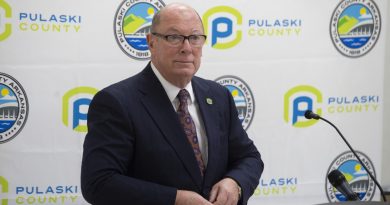
Chris Jones, a Democrat, is running against six-term Republican incumbent French Hill, who voted with most of his Republican colleagues for the bill. Jones said he would have voted against it – as every Democrat in both the House and Senate did.
Jones shared his thoughts on the consequential 2025 bill with us in an hour-plus interview. Hill’s office did not respond to our phone and email requests. That is not an unexpected response from Hill’s office, given that he or they have ignored at least a couple of other requests on our part to talk to the congressman for other stories, but the door remains open.
Let’s talk about the Affordable Care Act, aka Obamacare. Republicans have successfully been working to shrink or dismantle it. According to estimates, 14 million Americans will lose their Obamacare-enabled insurance by 2034.
A fundamental difference between how French Hill approaches this and how I would approach it goes back to an old saying about where you water the garden.
For millennia, farmers have known this, that if you want something to grow, you water the roots, the roots are strong, it creates the strong stem, and then the plant or the fruit or whatever will grow at the top. And I believe that. I think if you water the roots, if you take care of communities, if you take care of families, if you support small businesses and invest in them, then it’ll increase the middle class, which are the stems. And it will provide a ladder for folks who are going into the upper class.
I am a true believer in capitalism. So this is not an anti-capitalist statement. I don’t know what French Hill believes, but his policies indicate that he thinks if you water the top, then eventually it’ll get to the bottom. Well, we have decades of data to show that doesn’t work.
Is the Affordable Care Act still relevant?
Yes. The Affordable Care Act is not perfect, but it has saved lives, expanded coverage, protected people with preexisting conditions, and dramatically reduced the number of uninsured Americans. Arkansas was the only southern state to join ACA expansion through our private option. It’s also not perfect but it is significantly better than what we had previously.
Before the ACA, insurance companies could deny people coverage or charge them more because they had cancer, diabetes, asthma or another preexisting condition. Young adults could not necessarily remain on their parents’ plans until age 26. Millions of Americans were one serious illness away from financial ruin.
Here’s the truth: A preexisting condition should never become a preexisting excuse to deny someone healthcare. In terms of what will happen, we should improve the ACA, not return to the days when insurance companies decided that some people were too sick or too expensive to cover.
French Hill voted to repeal the ACA in 2017. He later voted for the 2025 law cutting Medicaid and Marketplace assistance. Then, in January 2026, when a bipartisan House majority voted to restore enhanced premium tax credits for three years, French Hill voted no.
Before the ACA’s major coverage provisions took effect, Arkansas had one of the highest uninsured rates in the country. The state’s overall uninsured rate fell by 6% from 2013 to 2022. Among younger adults, the uninsured rate fell from 27.5% in 2013 to 15.6% in 2014 alone, one of the largest declines in the nation.
Arkansas called it the Private Option, Arkansas Works, and now ARHOME. But every version was built on the Affordable Care Act.
Today, more than 200,000 Arkansans rely on ARHOME for health insurance. These are largely working adults who earn too much to qualify for traditional Medicaid but not enough to afford private coverage without assistance.
They include childcare workers, home-health aides, restaurant employees, construction workers, farmers, substitute teachers, caregivers, and people working multiple part-time jobs that do not provide insurance.
That is why the Medicaid cuts supported by French Hill are so dangerous. Cutting coverage does nothing to eliminate healthcare needs. It converts insured patients into unpaid bills and sends those bills directly to hospitals that can least afford them.
The bottom line is simple: Arkansans are paying more for healthcare and getting less protection from Washington. When it all boils down, healthcare should be treated as a human need, not a luxury product reserved for people who can afford to get sick.
How could the Affordable Care Act be improved?
First, Congress should restore and permanently extend the enhanced premium tax credits. Their expiration at the end of 2025 made coverage considerably more expensive for millions of Americans and insanely more expensive for Arkansans.
In Arkansas, Marketplace enrollment was approximately 12% lower in April 2026 than it had been one year earlier. Arkansans dropped coverage at more than twice the rate seen during the same period in 2025.
Those tax credits disappeared because Congress failed to act and made hard-working Arkansans pay more.
Second, we should establish a strong public insurance option that competes with private insurers and gives families another affordable choice. In counties where consumers have too few meaningful options, a public option could increase competition and restrain premiums.
Third, we must address deductibles and other out-of-pocket costs. Having an insurance card does not mean much if you cannot afford to use it.
If your premium is affordable but your deductible is not, you are insured on paper and uninsured in practice.
Fourth, we should allow more people approaching retirement age to buy into Medicare. A voluntary Medicare buy-in could help people in their 50s and early 60s, who often face the highest Marketplace premiums.
Finally, we must address the underlying price of care. That means negotiating more prescription-drug prices, stopping anticompetitive hospital and insurance consolidation, reforming pharmacy benefit managers, requiring honest price transparency, and holding insurers accountable when they improperly deny treatment.
Families should not have to choose between filling a prescription, filling the refrigerator or filling the gas tank.
We spend double the amount on healthcare per person than other wealthy countries, our life expectancy is lower than other high-income countries, we are an outlier when it comes to leaving so many people uninsured (we are the only industrialized country not providing universal healthcare to its citizens) and mortality rates relating to preventable and treatable illnesses are among the highest in the developed world. Is the country ready for Medicare for all?
We are the bottom of the barrel. America is an amazing country. We are the wealthiest country in the world, and there are so many opportunities here. And in this amazing, wealthy country, how much you make, whether you have a job or not, where you live or whether you’ve been sick before should not be the thing that determines whether you get needed healthcare, period. What is extreme and insane is leaving hundreds of thousands of people without healthcare.
Because at the end of the day, when we don’t insure folks, we still pay the price. It’s showing up – my wife’s an ER doctor – and it’s showing up in the emergency room. So kicking people off healthcare doesn’t actually lower the cost; it shifts the cost burden. And to me, that is a reason why the goal is across-the-board care, but we certainly need a real conversation about how to operationalize that. What we don’t need is kicking millions of folks off of healthcare because that’s going to hurt us and we’re going to pay.
If a broader Medicare-based system can demonstrate that it will reduce costs, protect patient choice, and provide a responsible transition, it deserves serious consideration.
What is your response to the Republican Medicaid cuts?
The 2025 Republican reconciliation law contained approximately $990 billion in Medicaid and CHIP (Children’s Health Insurance Program) funding reductions over 10 years. The Congressional Budget Office projects that its Medicaid and CHIP provisions will leave approximately 7.5 million more people uninsured by 2034.
These cuts helped finance a law that disproportionately benefits wealthy households and large corporations. Washington took healthcare away from people with the least so it could deliver more tax advantages to people with the most.
French Hill voted for it. That was not an abstract budget vote. It threatens health coverage, rural hospitals, nursing homes, maternity care, disability services, and the financial stability of Arkansas families.
A budget is a statement of values. French Hill’s budget says another tax break matters more than another Arkansan’s healthcare.
How do Medicaid cuts affect rural hospitals and maternity care?
Medicaid is the financial backbone of rural healthcare. It finances more than 40% of births nationally and covers an especially large share of births in rural communities.
Nearly 35% of counties nationwide are maternity-care deserts. Here in Arkansas, 33 of our 75 counties are considered maternity-care deserts. Approximately 5,000 babies were born to residents of those counties in 2024. A mother’s ZIP code should not determine whether she and her baby survive childbirth.
When Medicaid funding is reduced, rural hospitals do not have an easy way to replace it. They may eliminate obstetric care, reduce staffing, close clinics, postpone equipment purchases, or shut their doors entirely. You cannot cut nearly $1 trillion from Medicaid and then act surprised when rural hospitals start turning out the lights.
A hospital closure also damages the local economy. In many rural communities, the hospital is one of the largest employers and an essential part of attracting families and businesses.
When a rural hospital closes, a community loses more than a building. It loses jobs, security and precious minutes in an emergency.
We cannot claim to support rural Arkansas while voting to remove the healthcare infrastructure that allows rural communities to survive.
What is your position on Medicaid work requirements?
Most working-age Medicaid recipients already work, attend school, care for family members, have disabilities, or qualify for an exemption. The real question is whether eligible people should lose healthcare because they could not navigate a complicated reporting system.
Arkansas has already tested this idea. Approximately 18,000 people lost coverage under the state’s earlier work-reporting experiment, but researchers found no meaningful increase in employment.
Arkansas tried Medicaid work requirements. They did not produce more work. They produced more uninsured people.
People frequently lost insurance because they did not understand the requirements, lacked reliable internet access, worked inconsistent hours, or could not complete the reporting process. That is why these policies are better described as paperwork requirements.
If the objective were employment, Congress would invest in job training, transportation, affordable childcare, broadband, and treatment for health conditions that prevent people from working.
SNAP benefits were also heavily curtailed in the One Big Beautiful Bill. And the amount of money a person gets in SNAP has been reduced.
When Republicans think of SNAP, they think of waste, fraud and abuse. And they talk about SNAP or food stamps that way because that’s how they frame the program to the public.
But the reality is, there’s far more fraud on Wall Street than there is in the person at the grocery store trying to use food stamps, right? There’s more fraud from this White House. You know, when you want to go after fraud, go after the $400 million plane given to Trump. Go after $15 million to fix a reflecting pool and the job is so bad that within two weeks, it’s already botched. There are a lot of places to go after fraud if you want to go after it.
Some of these cuts to healthcare and SNAP were delayed until after the election. What’s that about?
Many of the most disruptive provisions do not fully take effect until after the 2026 midterm elections. Voters should ask why.
If French Hill and congressional Republicans believe these policies will help Arkansas families, they should identify how many Arkansans are expected to lose coverage, which hospitals will absorb the unpaid bills, what the administrative systems will cost, and what happens when eligible people are removed because of paperwork problems.
They scheduled the vote before the election and the pain after it.
How have rising prices affected these issues we’ve been talking about?
What French Hill and Republicans have done is they worked to convince us, the voters, that we are not in pain. Oh, gas isn’t actually that bad. Oh, we’re going to end the war, you know, the war’s over. We won. Oh, don’t worry about the reflecting pool. We’re going to get it right. It was actually an Olympian’s fault. Don’t worry about the cost of LEARNS and the money that’s leaving the public schools where we’ve got public schools with mold in them.
So step one: Convince people that there is no pain. But when you cannot convince them that they’re not in pain, the next part of the process is to blame somebody else, convince them that it’s somebody else’s fault. Not the people who are writing the laws. So they’ll say, oh, actually, it’s all the Democrats.
Look, Democrats have not been in power in Arkansas in a long time. Democrats are not in power right now in Washington, D.C. We are in a world now where people are feeling the pain. And I think they’re more clear about who was responsible for that pain. French Hill has a record, and that record is showing that he voted to increase bank fees when they could have been kept down and capped at $5. He voted to increase the price of insulin. He voted in a way that cut funding to rural hospitals. He supported the One Big Beautiful Bill. He voted against being able to organize as a union. You name it, issue after issue. He’s been silent on the Iran war and what it means. He’s been silent on tariffs and their impact on our pocketbooks. So I think we’re in a different world now, and I am hopeful that voters will realize that the situation we’re in is a direct result of decisions that French Hill and his friends have made, and it’s time for a new direction.
Look, I’m a Democrat. But I’m not going to Washington to be an automatic vote for Democrats. I’m going there to serve the best interests of Arkansans, period. French Hill votes almost 100% of the time however Trump and other Republicans want him to vote. He’s just a rubberstamp. And because he’s a rubberstamp, his votes have helped expand the national debt to over $40 trillion. French Hill is a banker; he knows the math. He knows that his votes would increase the debt. And at the same time he’s adding trillions to the debt, he’s pinching pennies and kicking the poor off of programs they desperately need and then votes to cut taxes on his rich friends.
Some of Jones’ answers to our questions came from written responses he provided and some came from our taped conversation with him, both of which have been lightly edited.
Source link