
Petrol just broke €2 a litre in Spain, and 11 straight weeks of rises say it won’t stop there « Euro Weekly News
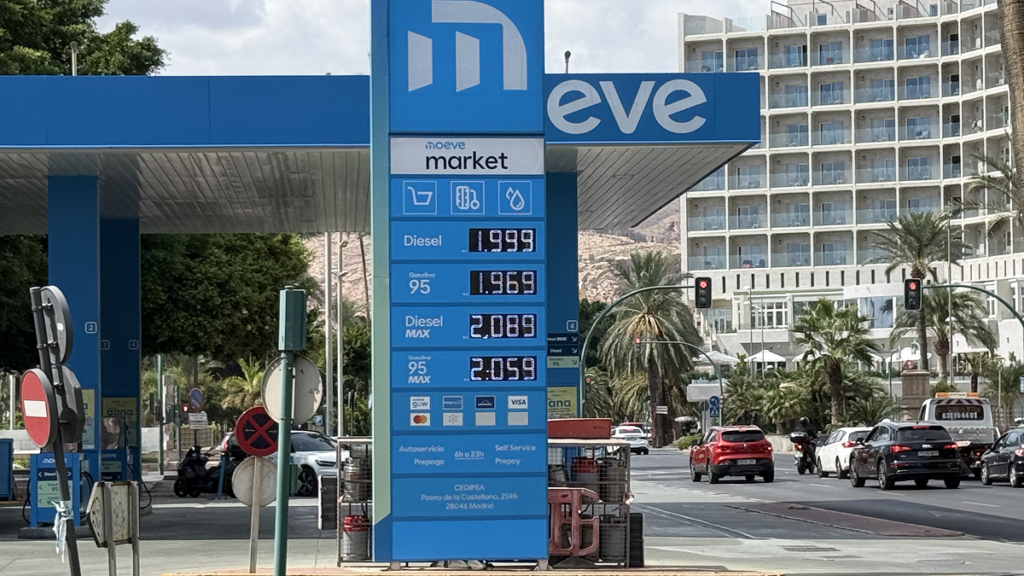
A price board in Almería shows diesel and premium fuel already brushing past the €2 a litre mark. Credit: Euro Weekly News
Some forecourts are now charging more than €100 to fill a family car, and the €2-a-litre mark has already been broken at pumps nationwide. With a government discount about to disappear at the end of the month, drivers have little reason to think this is the last increase.
More than 150 stations in Aragón alone are already above €2
Across Spain, drivers filling up this week are finding the €2-a-litre barrier already broken, and not as a future warning anymore. In Aragón alone, more than 150 service stations have crossed that threshold for regular petrol, according to regional price monitoring reported on Wednesday September 16.
The picture is worse on the islands. In Menorca, the five most expensive forecourts are charging more than €100 to fill a standard family car, and price gaps of more than 10 cents a litre have opened up between stations in the same city, so where someone chooses to fill up now makes a real difference to the final bill.
Petrol has risen for 11 straight weeks
The national average price for regular petrol reached €1.866 a litre on Thursday September 17, its 11th consecutive week of increases, a rise of 2.88 per cent in the past seven days alone. Diesel, at €1.834 a litre, resumed climbing after a single week’s dip, up 2.17 per cent over the same period. Petrol is now around 30 per cent more expensive than it was at the end of June.
The trigger is geopolitical, as Brent crude surged to more than 107 dollars a barrel after attacks in the Strait of Hormuz and Saudi Arabia’s pre-emptive closure of the Yanbu pipeline, both of which squeezed the flow of oil onto world markets. Spain imports the vast majority of its crude, so a shock at that scale reaches Spanish pumps within days.
A fuel discount already at the centre of the dispute is also about to disappear
Drivers are currently ‘cushioned’, although many drivers will rightfully argue that term this week, by a government discount of 20 cents a litre on diesel and 5 cents on petrol, applied through the Impuesto Especial sobre Hidrocarburos (IEH), the special tax on hydrocarbons. That relief is due to expire on September 30, as EWN has previously reported, and hauliers have already accused some filling stations of failing to pass on the existing discount rather than pocketing the difference.
If the discount is not extended, industry estimates suggest diesel could rise by as much as 24 cents a litre from October 1, taking it towards €2.08, while petrol could add around 6 cents to reach roughly €1.92 on average. On a 50-litre tank, that is close to €12 more for diesel drivers and around €3 more for petrol drivers, on top of the immense increases already being felt.
What drivers can do before prices rise again
It’s all about timing right now. With the current discount still active until the end of September, filling up before then locks in the cheaper rate ahead of any further increase, and EWN’s guide to finding the cheapest local station remains the quickest way to check nearby prices before setting off.
The gap between petrol stations is unusually wide at the moment, so it’s worth comparing more than one station rather than stopping at the first, particularly for drivers on the islands or in rural areas with fewer alternatives nearby and no realistic public transport to fall back on.
Spain’s price climb was expected to take until 2027
Even after this surge, Spain remains below the European Union average of €2.063 a litre for petrol and €2.158 for diesel, and diesel in particular stays noticeably cheaper than the 190.72 pence a litre (around €2.23) being paid at UK pumps this month according to official government figures. Petrol in the UK, at 168.14 pence (or roughly €1.96 a litre) is now closer to Spain’s price than many drivers might expect.
EWN reported in November 2025 that analysts expected fuel to reach €2 a litre “by 2027”, driven by the EU’s incoming carbon-trading costs for fuel suppliers. Well, that threshold has now been crossed early, and the government has not yet said whether it will extend the current discount before it lapses on September 30. Until it does, drivers have no way of knowing how much worse October will be.