A Rs 5,000 spending cap. A fleet of Defenders, Thars. Welcome to the DUSU election
Speaking to Newslaundry, Shokeen said, “The entire campus gets together during the election season. These car rallies are a way to show support.”
The NSUI member said that while there was a cap on how much a candidate could spend, such car rallies happen on the “good will” of the “community and organisation.”
“I have brought three cars to support my brothers. However, every year many candidates also rent vehicles on a per day basis which suit their budget. If needed, the car rental agencies can also provide drivers. It is a show business which illustrates the support for the candidates,” he said.
A member of Samajwadi Chhatra Sabha, speaking to Newslaundry on condition of anonymity, said, “We get the support for our organisation during the campaigning. Roadshows happen every year. Of course, these cars do not all belong to students. Look closely, every car will not have the correct spelling of the candidate, so in case, there is a complaint, it does not fall on the candidates.”
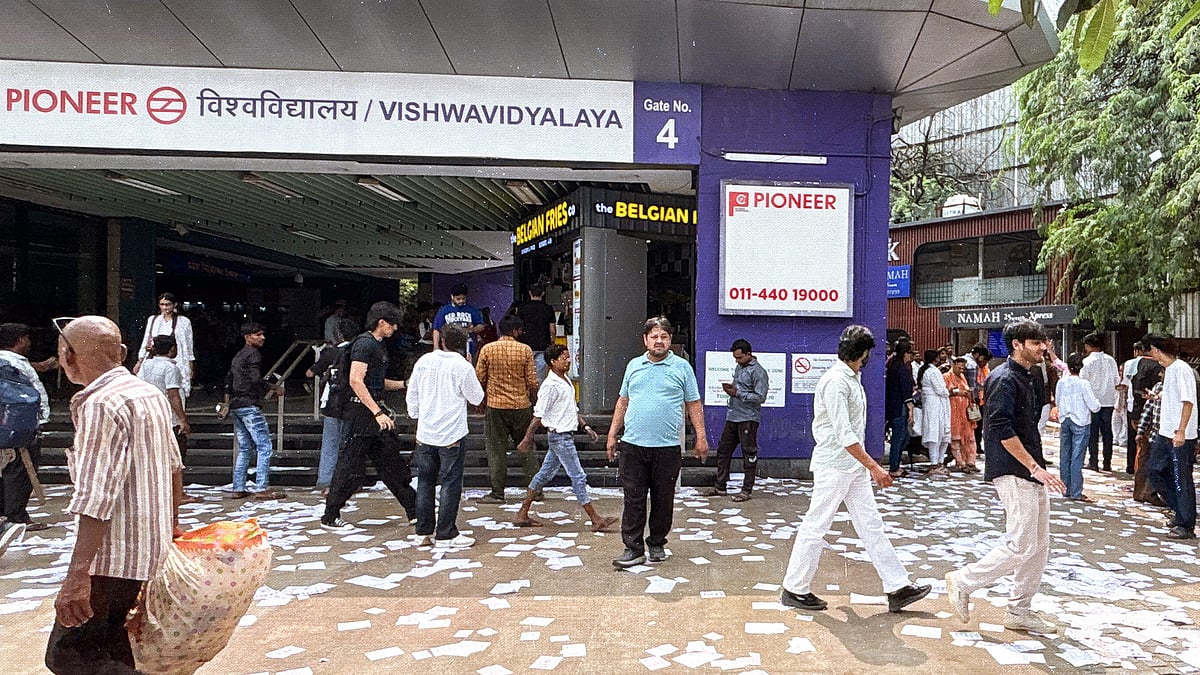
But students also questioned the way some of these rallies are conducted. Nishkarsh, a student of Ramjas College, said, “I saw people hanging out of car windows and appearing to be intoxicated during campaigning. They were engaging in hooliganism, even climbing onto cars. It is your political right to campaign, but it is not your democratic right to stand out of your car, and engage in such behaviour.”
Such rallies fall squarely within what the Lyngdoh Committee recommendations prohibit.
A Rs 5,000 spending cap
The recommendations also prescribe a maximum permitted expenditure of Rs 5,000 per candidate. “With the view to prevent the inflow of funds from political parties into the student election process, the candidates are specially barred from utilising funds from any other sources than voluntary contributions from the student body.”
Shokeen believes that the Lyngdoh committee recommendations need reform. “The Rs 5000 per candidate spending limit is too little. It is difficult to cover the cost of campaigning under that amount. We will demand reforms.”
Ashutosh Singh, the former national media convenor of the ABVP, said, “The Lyngdoh committee recommendations were set in 2005-06, but the same spending cap is still in place today. Expecting us to stick to a 20-year-old cap isn’t practical. We follow all the guidelines, but they need to be updated for today.”
Ram Mandir trips, Parliament visits
Candidates also reach out to students by distributing food and organising events.
Anurag, a student in the Department of Hindi, said, “During the 2025 election, 19 buses carrying 517 students went for a Ram Mandir visit organised by ABVP. I was also one of the students who went on that trip. This year too, like every year, students are being taken on visits to different places, including Parliament.”
Anshika Yadav from Indraprastha College For Women spoke of a visit to Parliament organised by the NSUI. “NSUI members had forwarded Google Forms to our group for a parliamentary visit. Students who were interested filled out the forms and were asked to reach the metro station at the given time. From there, the NSUI members helped us with the entry process. I have also attended one such visit, and they helped us get the necessary entries.”
Meanwhile, outreach activities also intensify right before polling night, said Anurag.
“On the night before the election, in areas with a large number of PGs and hostels, pizza and burger packets are delivered in large numbers. A small slip with a ballot number written on it is handed out along with the food.”
Student groups also target voters by region and demographic, he added.
“One of ABVP’s key strategies is targeting students from the Purvanchal region. Around 55% of DU’s student demographic is from Uttar Pradesh and Bihar, and to attract their votes, it organises ‘Purvanchal Mahotsavs’. Yesterday, ABVP held one at Ramjas College, where BJP leader Manoj Tiwari and Bhojpuri actress Akshara Singh were present. Bhojpuri songs and Chhath songs were played to create an emotional connection with students,” he said.
NSUI runs similar outreach on a smaller scale, he said, adding that both organisations hold comparable events for students from Haryana and Rajasthan.